
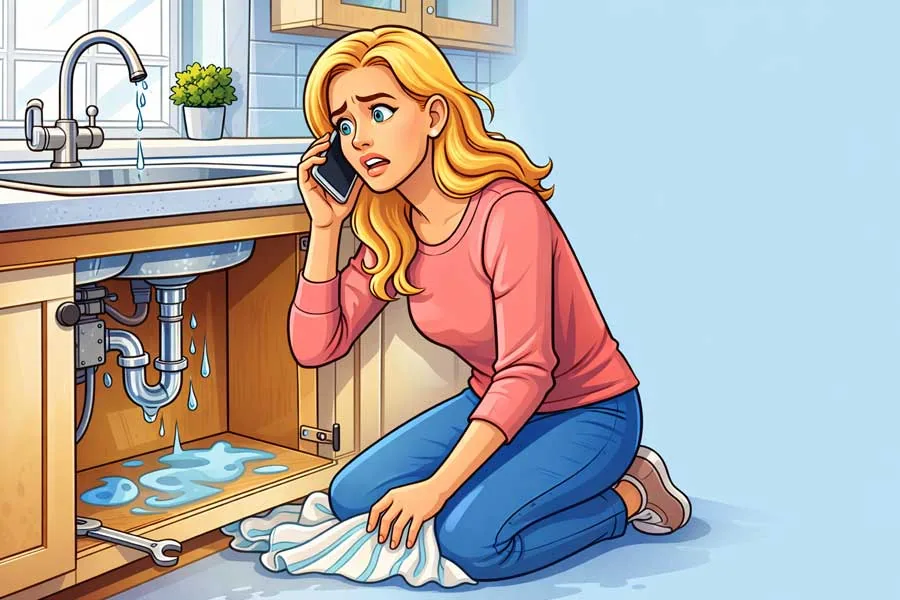
10 Things You Should Do Before Calling a Plumber
When plumbing goes sideways, it’s easy to panic and call immediately. Sometimes that’s the right move. But a lot of the time, you can stop damage fast, avoid safety risks, and give your plumber the exact info they need to fix it quickly.
Below are the top 10 things you should do before calling a plumber, written for real homes and real problems, not “perfect world” DIY. Some of these steps take 30 seconds and can save you hundreds of dollars in damage.
Table of Contents
- 1) Shut off the water at the closest valve
- 2) If water is near electricity, cut power safely
- 3) If you smell gas, leave and call for help
- 4) Contain the leak and start drying right away
- 5) Stop a toilet overflow fast
- 6) Try the safest first steps for a slow drain
- 7) Troubleshoot a garbage disposal safely
- 8) Do basic water heater checks, then stop
- 9) Recognize sewer backup signs and stop using water
- 10) Gather details, photos, and clear access for the plumber
- When to call immediately
- What to tell your plumber on the phone
- Make the Smart Choice Before Calling a Plumber
- FAQs
- Sources
1) Shut off the water at the closest valve
If you take only one step from this whole post, make it this one. Stopping the water is the fastest way to prevent ruined flooring, swollen cabinets, and hidden wall damage.
- Sink leak: Close the hot and cold shutoff valves under the sink (turn clockwise).
- Toilet leak or overflow: Close the toilet shutoff valve behind the toilet (turn clockwise).
- Washing machine leak: Shut off the washer supply valves behind the machine.
- Whole-house problem: Use your main shutoff valve (usually near the meter, garage, or where the main line enters the home).
Tip: If the shutoff valve is stuck, do not force it so hard you snap it. That’s a fast way to turn a small leak into a major one. If it won’t budge, move to the next closest shutoff point you can safely operate.
2) If water is near electricity, cut power safely
Water and electricity is a “no hero moves” situation. If water is pooling near an outlet, power strip, appliance cord, or your electrical panel area, your first job is to avoid becoming the path to ground.
- Do not step into standing water to reach a switch or breaker.
- If it’s safe to do so, shut off power at the breaker for the affected area.
- If it’s not clearly safe, back away and call a professional.
This is also why it’s smart to keep a flashlight handy and know where your main breaker is before you ever need it.
3) If you smell gas, leave and call for help
If you smell gas, do not troubleshoot. Do not “check the connection.” Do not flip switches. Get outside first, then call emergency services and your gas utility from a safe location.
- Leave the building immediately.
- Call 911 and your gas utility.
- Do not use lighters, phones, or switches while still inside.
This one is worth repeating: if there’s a gas smell, your job is to get out, not investigate.
4) Contain the leak and start drying right away
Even after you shut off the water, the damage clock is still running. Water spreads under flooring, into baseboards, and behind cabinets fast.
- Contain: Use buckets, towels, and pans to keep water from spreading.
- Protect: Move anything that can soak up water (rugs, boxes, stored items).
- Dry: Run fans and a dehumidifier if you have one, and open cabinets to help airflow.
Moisture that lingers can contribute to mold growth and odors, especially inside cabinets and wall cavities. Drying early is one of the best things you can do while you wait for help.
5) Stop a toilet overflow fast
A toilet overflow feels dramatic, but you can usually stop it quickly.
- Close the toilet shutoff valve behind the toilet (turn clockwise).
- Remove the tank lid and lift the float to stop the refill.
- Use a flange plunger (the kind shaped for toilets) for a clog.
If multiple toilets or drains are backing up, skip plunging and jump to the sewer-backup section below. That’s a different kind of problem.
6) Try the safest first steps for a slow drain
Slow drains are common, and you can sometimes fix them without turning the situation into a chemical hazard or a pipe-damage issue.
- Remove the stopper or strainer and pull out hair and gunk (yes, it’s gross, and yes, it works).
- Plunge correctly: For a sink, block the overflow hole with a wet rag and use a few strong plunges.
- Hot water rinse: For kitchen grease buildup, hot water can help after you remove debris.
About chemical drain cleaners: they can burn skin and eyes, and they can complicate the repair if the drain still needs to be opened. If you used chemicals already, tell your plumber before they start working so they can protect themselves properly.
7) Troubleshoot a garbage disposal safely
A garbage disposal that “hums,” stops, or won’t turn on is often an electrical reset issue, not an instant replacement.
- Turn it off first: Switch off the wall switch and unplug it if possible.
- Press the reset button: Most disposals have a small reset button on the bottom.
- Check the outlet: Many disposals plug into a GFCI outlet under the sink that may have tripped.
- Never put your hand inside the disposal, even if it is off.
If the unit jammed and you do not know the safe way to free it, that’s a good time to call. A quick service call is cheaper than a hand injury or a damaged unit.
8) Do basic water heater checks, then stop
Water heater problems can be simple or serious, and it’s smart to stay in the “basic checks only” lane unless you’re trained.
- No hot water (electric): Check the breaker for a tripped circuit.
- No hot water (gas): Look for obvious status-light error codes if your unit has them.
- Active leak: Shut off the cold-water supply valve feeding the heater.
- Safety: If you suspect gas, leave and call for help (see the gas section).
If you have water around the heater and you’re unsure what’s powered or what’s leaking, don’t keep poking around. Take photos and call. Water heaters can flood a garage or utility closet quickly.
9) Recognize sewer backup signs and stop using water
When it’s a sewer or main-line issue, using more water makes everything worse. The goal is to stop feeding the problem.
Common signs include:
- Multiple drains backing up at the same time (sink, tub, toilet).
- Gurgling sounds when you flush or run water.
- Sewage odors or water coming up in a shower or tub.
- Toilet bubbles when another fixture runs.
If you suspect a sewer backup, stop running water, keep people and pets away from the affected area, and call for service. This is one of those “call now” situations.
10) Gather details, photos, and clear access for the plumber
This is the step that saves time on-site, and time is money.
- Take photos and video: The leak, the water level, the affected area, and any visible pipe or valve.
- Write down what happened: When it started, what changed recently, and what you already tried.
- Find brands and models: Especially for water heaters, disposals, toilets, and filtration systems.
- Clear access: Empty under-sink cabinets, move storage away from the water heater, and make a path to the shutoff valve or cleanout if you know where it is.
If you’re in Ventura County and you want a local team that knows the common issues in coastal and hillside homes, here’s our city page: ventura plumber.
When to call immediately
Some situations are not “wait and see.” If any of these are happening, call right away:
- You cannot stop the water with fixture shutoffs or the main shutoff.
- Water is near electrical outlets or your panel area.
- There is sewage backing up into tubs, showers, or floor drains.
- A ceiling is bulging or leaking from above (especially under a bathroom).
- Your water heater is leaking heavily or making alarming sounds.
- You smell gas or suspect a gas-related issue.
If it’s urgent, use our 24/7 emergency plumbing service page and call right away.
What to tell your plumber on the phone
If you want faster service and fewer surprises, share these details when you call:
- What happened: Leak, clog, no hot water, sewer backup, or low pressure.
- Where it is: Kitchen sink, upstairs bath, laundry room, water heater closet, outside cleanout.
- How bad it is: Drip, steady stream, flooding, or backup into fixtures.
- What you already tried: Shutoffs, plunging, reset button, breaker check, debris removal.
- Any hazards: Electricity nearby, gas odor, chemicals used in the drain.
Also ask a practical question: “Do you need me to keep the water off until you arrive?” That alone prevents a lot of accidental re-flooding.
Make the Smart Choice Before Calling a Plumber
Doing a few quick checks before calling a plumber can save your home from serious damage and help the repair go faster. It also helps you avoid the most common homeowner mistake: letting water run “just a little longer” while you search for answers.
At Smart Choice Plumbing & Drains, we’re happy to walk you through the basics over the phone, then send a licensed pro when it’s time. Whether you’re dealing with a stubborn clog, a water heater issue, or a fast-moving leak, we’ll give you clear options and straightforward pricing.
- Emergency help: Fast response through our 24/7 emergency plumbing service.
- Home plumbing: Repairs and upgrades on our residential plumbing services.
- Business plumbing: Reliable help for property managers and storefronts via commercial plumbing.
- Budget-friendly options: Ask about financing options when the fix is bigger than expected.
- Service area: See all locations on our Areas We Serve page.
Need help now? Call (805) 340-1810. License #1129641. 24/7 Emergency Service and Financing Options Available.
FAQs
Should I use a chemical drain cleaner before calling?
It’s usually better to start with debris removal and plunging. Chemical cleaners can be hazardous and can complicate repairs if the clog remains.
Why is only one faucet losing pressure?
Often it’s a clogged aerator or a partially closed shutoff valve. If multiple fixtures lose pressure, it may be a bigger issue like a leak or supply problem.
How do I know if it’s a sewer line problem?
If multiple drains back up at once, you hear gurgling, or water comes up in a tub or shower, it may be a main-line issue. Stop using water and call.
What if my shutoff valve won’t turn?
Do not force it until it breaks. Use the next shutoff point you can safely access (fixture, then main) and call a plumber to repair or replace the stuck valve.
Can a small leak wait a few days?
Sometimes, but it’s risky. Small leaks can rot cabinets, warp flooring, and feed mold. If you can’t stop it fully or it’s inside a wall or ceiling, call sooner.
Sources
A Brief Guide to Mold, Moisture and Your Home (U.S. EPA)
What’s in Drain Cleaner and What Happens If It Gets on Skin or Is Swallowed? (Poison Control)
Sodium Hydroxide Medical Management Guidelines (CDC/ATSDR)
What To Do If You Smell Natural Gas (Connecticut Public Utilities Regulatory Authority)