
Introduction
Low water pressure can turn a soothing shower into a trickle, make dishwashing a chore, and leave laundry loads half rinsed. For homeowners in Ventura and Santa Barbara counties, reliable water flow is not just a convenience, it is a necessity for daily life and maintaining property value. In this detailed guide we’ll explore what causes low pressure, how to test your home’s system, step-by-step troubleshooting methods, and when to call in professional help. By the end you’ll have practical tips and DIY solutions to boost your water pressure and keep every fixture in your home running at full strength.
Understanding Water Pressure Basics
Water pressure is the force that pushes water through your pipes and out of faucets. It is measured in pounds per square inch (PSI). Most homes perform best with a steady pressure between 45 and 60 PSI. Too low and you get weak flow. Too high and you risk damaging fixtures and appliances. Water pressure comes from two main sources: municipal supply and your home’s internal plumbing. The municipal system maintains a base pressure that can fluctuate with demand. Within your home, fixtures like pressure regulators, valves, pipes, and outlets all influence the final pressure you feel at the tap.
Common Causes of Low Water Pressure
Identifying the root cause of low pressure is the first step to restoring strong flow. These issues often overlap, so a systematic approach is best:
- Partially Closed Main Shutoff – If the main valve is not fully open, it restricts overall supply.
- Pressure Reducing Valve (PRV) Malfunction – A faulty PRV can drop pressure below recommended levels.
- Clogged Aerators or Showerheads – Mineral deposits accumulate in faucet screens and spray holes.
- Corroded or Leaking Pipes – Old galvanic or cast iron pipes develop scale and pinhole leaks over time.
- Irrigation and Outdoor Demands – Running sprinklers or filling pools can reduce indoor pressure during peak use.
- Municipal Supply Issues – Pipe repairs, hydrant testing, or main breaks in your neighborhood can lower municipal pressure.
- Water Softener or Filtration Systems – Clogged resin beds or filter cartridges can reduce flow.
- Fixture-Specific Valve Issues – Under-sink isolation valves or washer shutoffs partially closed impede flow.
How to Test Your Home’s Water Pressure
Before making adjustments, you need to know your current pressure. Follow this simple test:
- Obtain a Pressure Gauge – Purchase a screw-on gauge from a hardware store. They cost under twenty dollars and attach easily to a hose bib or faucet.
- Choose a Test Fixture – Pick an exterior hose bib or laundry tap closest to the main line. Indoor sinks may have cartridges that affect readings.
- Attach the Gauge – Screw the gauge on tightly to prevent leaks.
- Open the Valve – Open the faucet fully and allow water to flow. Read the gauge once the needle stabilizes.
- Record and Compare – Note the PSI. Values under 45 PSI indicate low pressure. Above 80 PSI may damage seals and fittings.
Repeat at different fixtures to identify if low pressure is a whole-house issue or localized to one area.
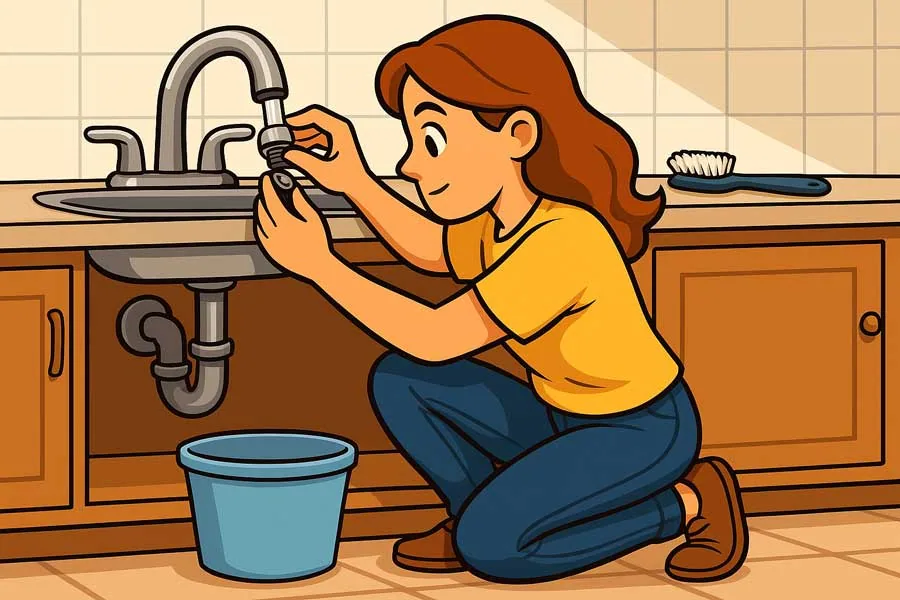
Step 1: Inspect Faucet Aerators and Showerheads
Often the simplest fix is cleaning fixture screens. Minerals in our local water supply can build up quickly:
- Remove Aerators – Unscrew the small screen from faucet spouts. For showerheads reduce deposits by soaking in a vinegar solution overnight.
- Clean Screens – Rinse screens under running water and scrub with an old toothbrush to remove scale and debris.
- Reinstall and Test – Tighten the aerator snugly by hand and run water. You should notice an immediate improvement in flow.
If cleaning fixes the problem, make screen maintenance part of your seasonal routine. For a permanent upgrade consider low-maintenance quick-clean designs available through our Services page.
Step 2: Verify Main Shutoff Valve and Fixture Valves
Valves can stick or be left partly closed after repairs. Check these key points:
- Main Shutoff Valve – Locate the valve near where the supply enters your home. Turn it fully counterclockwise to open. Avoid over-torquing which can damage the stem.
- Fixture Isolation Valves – Under sinks and behind toilets you’ll find small valves on supply lines. Confirm they are fully open by turning counterclockwise until snug.
- Pressure Regulator (PRV) – If you have a PRV, usually located near the main shutoff, check the adjustment screw. Clockwise lowers pressure, counterclockwise raises it. Adjust in small increments and retest.
Properly set and fully open valves ensure maximum available municipal pressure reaches every fixture in your home.
Step 3: Examine Your Plumbing Layout and Pressure Reducing Valve
Homes with multiple zones or additions often add a PRV to protect plumbing. Over time PRVs can wear out:
- Identify Your PRV – Look for a bell-shaped body with an adjustment screw on top near the main supply. Check your owner’s manual or visit our Areas We Serve page for help locating key components.
- Test Downstream Pressure – Attach a gauge downstream of the PRV. If readings remain low even with PRV set to maximum, the valve may need replacement.
- Bypass for Testing – Some PRVs have a bypass port; consult a professional on temporary bypass to confirm the PRV is the culprit.
- Replace PRV if Necessary – A failing PRV can allow debris inside the valve body to restrict flow or fail to hold the set pressure. We recommend professional replacement to ensure proper calibration.
A well-functioning PRV balances protection and performance, shielding your plumbing from high pressure while maintaining strong flow.
Step 4: Check for Leaks and Corroded Pipes
Leaks silently steal water and reduce downstream pressure. Corroded pipes narrow over time:
- Inspect Exposed Plumbing – Look under sinks, in basements or crawl spaces for damp spots, rust, or puddles. Even a small drip can drop line pressure noticeably.
- Listen for Hissing Sounds – In hidden spaces press an ear against walls or near gas lines (water lines can hiss too). Hissing often indicates a pinhole leak.
- Check Corrosion – Old galvanized pipes build internal scale and rust reduces diameter. Consider repiping corroded segments with modern PEX or copper through our Services page.
Early leak detection not only restores pressure but also prevents structural damage and mold growth.
Step 5: Flush Water Heaters and Remove Sediment
Sediment buildup in storage tanks and tankless units can impede flow and damage components:
- Tank Water Heaters – Turn off power or gas, attach a hose to the drain valve, and flush hot water until it runs clear. Sediment removal improves inlet flow.
- Tankless Units – Descale annually per manufacturer guidelines to maintain full flow rates. Use a service kit found on our Services page.
- Hot and Cold Lines – Flush both sides if your system has a dedicated mixing valve or thermostatic mixing.
Routine flushing ensures optimal performance and extends the life of your water heater, leaving more pressure for showers and appliances.
Step 6: Evaluate Your Water Softener or Filtration System
Whole house water treatments protect pipes but need upkeep:
- Bypass Test – Temporarily bypass your softener or filter. If pressure improves, it signals a clogged resin bed or cartridge.
- Clean or Replace Media – Regenerate softeners as recommended and replace filters per manufacturer schedules. Always follow instructions to prevent system damage.
- Consider Upgrades – High-flow water treatment systems minimize pressure drop. Learn about options on our Services page.
Maintaining your treatment equipment keeps water quality high without sacrificing pressure.
Step 7: Investigate Municipal Supply and Neighborhood Activity
Sometimes pressure drops outside your home are caused by city work or seasonal demand:
- Contact Your Water Provider – Call your municipal water department to check for main repairs, hydrant flushing, or known issues in your area.
- Check Peak Usage Times – Evening peak demand often lowers pressure. Try running the dishwasher or laundry in off-peak hours early morning or late at night.
- Join Community Alerts – Sign up for neighborhood notifications on our Contact page so you know when planned maintenance might affect your water pressure.
Understanding external factors prevents unnecessary DIY troubleshooting and helps you plan major water-using tasks efficiently.
Step 8: Consider a Water Pressure Booster Pump
If municipal supply cannot meet your needs adding a booster pump is an effective solution:
- Types of Pumps – Single-stage booster pumps serve whole-house systems, while point-of-use pumps boost pressure at a single fixture like a shower.
- Installation – Booster pumps require professional installation to match pump capacity with your home’s plumbing layout. Contact our licensed technicians through our Contact page.
- Energy Use and Noise – Modern pumps are energy efficient and run quietly, but consider placement away from living spaces.
- Maintenance – Like any mechanical device boosters need occasional inspection and lubrication. Ask about our maintenance plans on the Services page.
A properly sized booster pump can raise pressure from 30 PSI to a full 60 PSI or more, transforming weak drips into strong streams.
When to Call a Professional
While many pressure issues can be resolved with DIY steps professional help is wise when:
- Pressure Regulator Replacement – Swapping out a PRV requires specialized tools and calibration.
- Corroded or Burst Pipes – Excavating and repiping damaged lines is best left to experienced plumbers.
- Complex Plumbing Layouts – Homes with multiple zones additions or booster pumps need system-wide diagnostics.
- Persistent or Recurring Problems – If pressure drops return despite troubleshooting, there may be hidden issues needing video inspection.
Our team at Smart Choice Plumbing & Drains provides expert diagnostics and repairs across Ventura and Santa Barbara counties. Find out more about our offerings on the Services page or see if we’re in your neighborhood via our Areas We Serve page.
Preventive Maintenance Tips
Keeping water pressure strong starts with good habits and regular care:
- Seasonal Aerator Cleaning – Schedule aerator and showerhead cleaning every three months to prevent clogs.
- Annual System Flush – Flush water heaters and service valves yearly to remove sediment.
- Valve Exercise – Turn isolation valves on fixtures and the main shutoff twice a year to prevent sticking.
- Filter and Softener Upkeep – Replace cartridges and regenerate as directed to maintain flow through treatment equipment.
- Monitor Usage Patterns – Note periods of low pressure and coordinate high-demand tasks during off-peak municipal hours.
- Quick Leak Checks – Inspect exposed pipes quarterly for drips or corrosion.
These simple steps keep your plumbing in top shape and ensure water flows at the right pressure whenever you need it.
Conclusion
Low water pressure can disrupt your daily routine and put stress on your plumbing system. By understanding pressure fundamentals, performing regular tests, and following step-by-step troubleshooting techniques, you can restore strong flow to every faucet, shower, and appliance in your home. Whether it’s cleaning fixtures, adjusting valves, flushing water heaters, or installing a booster pump, you now have the tools to tackle pressure problems confidently. If you encounter issues beyond DIY scope, Smart Choice Plumbing & Drains is ready to help with professional diagnostics and repairs. Visit our Contact page to schedule service today and experience consistent water pressure throughout your Ventura or Santa Barbara County home.