
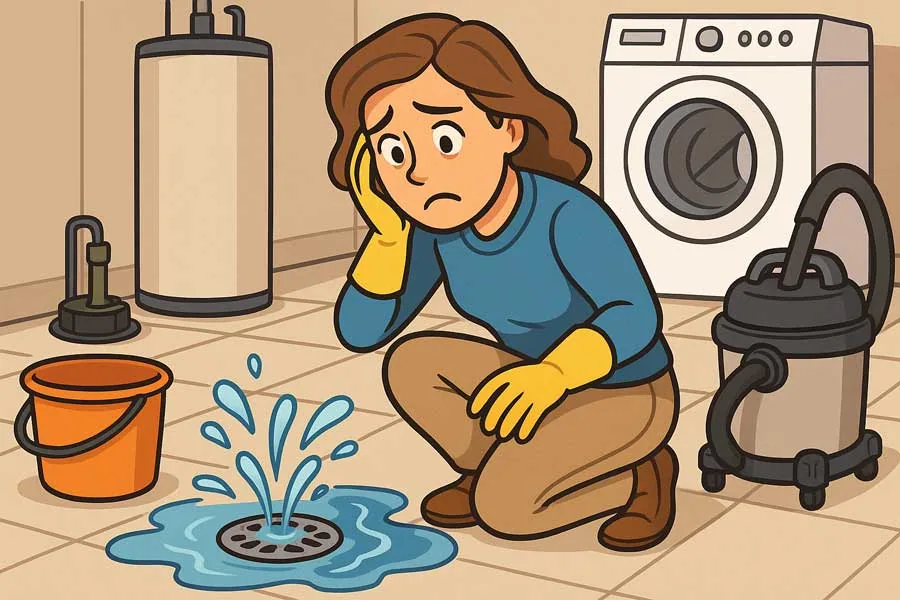
7 Fast Floor Drain Fixes When Water Backs Up
When a floor drain burps water back onto your basement or garage floor, it can turn a normal day into a wet mess. The good news is that most backups have simple causes and quick fixes you can try right away. With a few basic tools, a little patience, and a clear plan, you can stop the backup, clean up safely, and decide whether it is time to call a pro.
This guide walks you through seven fast, practical fixes in plain language. You will learn what to try first, how to keep sewer gas sealed out of your home, and the red flags that mean there is a bigger issue in the main line or with stormwater intrusion. Stick around for the FAQ at the end, where we answer common questions about floor drains, traps, code basics, and why rain sometimes makes everything worse.
Table of Contents
- Safety First
- 1) Remove the grate and clear the shallow blockage
- 2) Restore the P-trap water seal
- 3) Vacuum the line with a wet/dry vac
- 4) Snake the floor drain and nearby cleanout
- 5) Reset the sump pump and check backflow devices
- 6) Reduce household flow and do a quick main-line check
- 7) Schedule pro-level clearing or install a backwater valve
- Prevention: keep the drain ready before the next storm
- FAQ: Floor drain basics, traps, codes, and rainy-day backups
Safety First
Backed up water can be gray water or even sewage. Wear gloves and eye protection, keep kids and pets away, and unplug nearby electrical items. If you suspect a sewer backup affecting multiple fixtures, avoid running water anywhere in the house until you know the main line is clear. If the water appears to be stormwater entering through the floor drain during or after heavy rain, your main sewer could be overwhelmed or you may need a backwater valve. When in doubt, treat the area like a contaminated spill and sanitize after the water recedes.
1) Remove the grate and clear the shallow blockage
Why it helps: Many backups start right under the grate. Hair, lint, mop strings, pet fur, and sediment collect at the strainer and the first elbow of the floor drain.
How to do it fast:
- Unscrew or lift the drain grate. Set the screws where they will not fall into the drain.
- Scoop visible debris with a gloved hand or a small pick. A bent coat hanger or drain claw works well for hair and stringy materials.
- Flush test with a gallon of warm water. If it drains quickly, you found the culprit. If it burps or backs up again, move to Fix 2.
What you are removing: Common clog offenders include lint from laundry areas, paper towels, baby wipes, and small roots or grit that ride in from elsewhere in the system.
2) Restore the P-trap water seal
Why it helps: Every floor drain should have a P-trap to block sewer gas. If a floor drain is rarely used, the water in the trap can evaporate. A dry trap does not just smell. It can let air in that disrupts drainage and contributes to gurgling and poor flow.
Quick restore: Pour one to two gallons of clean water into the drain to refill the trap. For drains that sit unused for months, add a thin layer of mineral oil so the water evaporates more slowly. Better yet, install or maintain a compliant trap primer to automatically keep the seal filled. Trap primers are small devices that feed a little water to the trap whenever certain fixtures run, keeping that protective water seal intact.
3) Vacuum the line with a wet/dry vac
Why it helps: A wet/dry vacuum can pull out sludge at the trap bend or the first few feet of pipe faster than a chemical product, and without the risk of damaging older piping or finishes.
How to do it fast:
- Switch the vac to wet mode and use a narrow nozzle.
- Seal the opening with a rag around the nozzle to increase suction.
- Pulse suction for 10 to 20 seconds at a time. Empty the canister as needed.
- Flush test. If the drain still burps, move on to snaking.
Why we skip harsh chemicals: Enzyme or bio-based cleaners can help long-term maintenance, but they are not an instant fix for a blockage. Many chemical cleaners are not recommended on lines that may contain sewage or on older metal traps. Focus on mechanical removal first.
4) Snake the floor drain and nearby cleanout
Why it helps: If the blockage is beyond the trap, a hand auger or a small drum snake can break up debris the vac cannot reach.
How to do it fast:
- Feed the snake slowly past the trap until you feel resistance.
- Rotate and work through the blockage, then retract while running warm water if possible.
- If there is a nearby cleanout in the floor or wall, open it and run the snake from there to work the downstream section. Cleanouts are there for exactly this kind of access.
Signs you are beyond DIY: If the cable gets stuck, you pull back roots or thick wipes, or multiple fixtures are slow, it is time for a larger cable machine or hydro-jetting by a licensed plumber.
5) Reset the sump pump and check backflow devices
Why it helps: During storms or heavy laundry days, a failed sump pump or a stuck check valve can let water rise and find the floor drain as the lowest route back. Homes in flood-prone areas often need a working sump system and sometimes a backwater valve on the building sewer to stop public sewer surges from entering.
Quick checks:
- Verify the float moves freely and the pump cycles when you lift it.
- Test the check valve for a solid one-way seal. If it chatters or leaks, replace it.
- If you have a backwater valve, open the access cap and confirm the flapper moves and is clear of debris. A stuck valve can cause backups inside even when the street is fine.
6) Reduce household flow and do a quick main-line check
Why it helps: If the floor drain backs up whenever someone showers or runs the washer, you may have a partial blockage in the main line. Cutting household water use buys time and helps you test logically.
How to do it fast:
- Pause high-flow fixtures for 30 to 60 minutes.
- Check other drains and toilets. If several are slow or gurgling, the main needs attention.
- Open the main cleanout if you can do so safely. Standing sewage there is a strong sign of a downstream blockage or a public sewer issue.
If backups happen during rain only: The public sewer or your combined sewer may be overwhelmed, or groundwater is penetrating your line. A licensed plumber can camera-inspect and propose a backwater valve, spot repairs, or relining.
7) Schedule pro-level clearing or install a backwater valve
Why it helps: Professional clearing with the right cable size or hydro-jetting can restore the full diameter of the pipe and remove roots or heavy grease. In many jurisdictions, if fixtures are below the next upstream manhole, code requires a backwater valve to prevent public sewer surges from flooding your basement.
What to expect from a pro visit:
- Camera inspection to locate breaks, sags, or root intrusions.
- Right-sized cable or jet for the pipe. This is critical to avoid damage and to clear the full clog.
- Options discussion if the line is compromised, including spot repair, trenchless lining, or installing a code-compliant backwater valve with proper access for maintenance.
Prevention: keep the drain ready before the next storm
- Keep the trap wet. Pour water into rarely used floor drains monthly. Consider a trap primer where allowed or required.
- Use strainers and clean routinely. Lint and hair cause many shallow clogs.
- Mind what goes down drains. No wipes, paper towels, or grease. Roots and debris are common causes of main-line backups.
- Service your sump and check valve. Test the float, clean the pit, and verify the discharge.
- Ask a plumber about a backwater valve if rain regularly causes backups in your area. Some cities even offer subsidies.
FAQ: Floor drain basics, traps, codes, and rainy-day backups
What are floor drains used for?
Floor drains collect water from cleaning, laundry mishaps, minor leaks, and condensation so it flows safely to the sanitary system or a sump where permitted. They create a low point for unexpected spills and help keep spaces like basements, utility rooms, and garages dry.
Should a basement floor drain have water in it?
Yes. The P-trap below the drain should always hold water to block sewer gas. If the space is dry for long periods, the water can evaporate. Refill the trap with a gallon or two of water and consider a trap primer to maintain the seal.
What is the correct location of a floor drain?
Place floor drains at natural low points where water can be directed by modest floor slope, such as near water heaters, HVAC equipment, laundry areas, or in garages where allowed by local code. In many commercial or multifamily spaces the code specifies where floor drains are required or how they must connect. Always verify with your local authority.
Are floor drains required by code?
It depends on the space and your local code adoption. Many codes require floor drains in areas like commercial food prep, mechanical rooms, and parking structures, and they set rules for connections and interceptors. Residential requirements vary. Your local building department or licensed plumber can confirm what applies to your home.
Can a floor drain be used as a clean out?
A cleanout is a code-required access point for clearing blockages at set intervals in the building drain. Some floor drains include integral cleanout features, and you may use nearby cleanouts to service the same branch. Do not assume a floor drain is a substitute for required cleanouts unless the product and installation specifically meet your local code.
Why is water coming up through my basement floor drain after heavy rain?
Rain can overwhelm public sewers or your own line. If pressure builds downstream, your basement floor drain becomes the lowest relief point and water can push back into the space. Roots, partial blockages, or a missing or failed backwater valve make the problem worse. A plumber can camera-inspect and recommend clearing, repairs, or a backwater valve.
Does a floor drain need a P-trap?
Yes. Drains require traps to seal out sewer gas. Codes also require that traps vulnerable to evaporation be protected, typically by a trap primer or other approved method.
What are the four biggest plumbing code violations?
Common violations include missing or incorrect traps, improper venting, using the wrong materials or pipe sizes, and incorrect relief valve or discharge configurations. These vary by jurisdiction, but they show up often in inspections and can cause performance and safety issues.
Should I put a floor drain in the bathroom?
In some regions, bathrooms include floor drains to help with cleaning and overflow protection. Whether you should add one depends on local code, the structure, and how the bathroom is built. If permitted, it must be properly trapped and vented, tied into the correct system, and set at the low point with adequate floor slope. A licensed plumber can confirm what is allowed and coordinate with your inspector.
When to call a pro
If backups return quickly, if multiple fixtures gurgle or drain slowly, if you pull back roots or wipes with a snake, or if backups correlate with storms, it is time to bring in a licensed plumber. A pro can perform a camera inspection, clear the line correctly, and help you decide whether a backwater valve, repairs, or trenchless lining makes the most sense for your home and budget.
Sources
Basement Floor Drain Backing Up After Heavy Rain: Causes & Solutions, https://excelmechanical.com/basement-floor-drain-backing-up-after-heavy-rain-causes-and-solutions/
International Plumbing Code 2021, Chapter 10 Traps, Interceptors and Separators, https://codes.iccsafe.org/content/IPC2021P1/chapter-10-traps-interceptors-and-separators
International Plumbing Code 2021, Section 1002.4.1 Trap seal protection, https://codes.iccsafe.org/s/IPC2021P1/chapter-10-traps-interceptors-and-separators/IPC2021P1-Ch10-Sec1002.4.1
IPC Code Changes: Floor drains in multilevel parking structures, https://www.phcppros.com/articles/12573-ipc-code-changes-part-12
Common causes of basement floor drain backups, https://jarboes.com/knowledge-center/basement-floor-drain-backing-up/
Why drains back up when it rains, prevention ideas, https://www.toiletwhisperers.com/blog/why-do-my-drains-back-up-when-it-rains/
Backwater valves overview and requirements, https://www.phcppros.com/articles/1900-understanding-backwater-valves
Backwater valves, municipal notes and homeowner guidance, https://www.squareone.ca/resource-centres/getting-to-know-your-home/backwater-valve
ICC Digital Codes 2018, Chapter 7 Sanitary Drainage, cleanout intervals, https://codes.iccsafe.org/content/IPC2018/chapter-7-sanitary-drainage
City guidance referencing IPC/UPC for garage floor drains, https://www.cityoffernley.org/DocumentCenter/View/22495/Garage-Floor-Drains-in-Private-Garages
How plumbing traps lose water, homeowner tips, https://www.thisoldhouse.com/plumbing/21015874/how-a-plumbing-trap-can-lose-water
Common plumbing code violations, traps and materials, https://apexpros.com/10-of-the-most-common-plumbing-code-violations/
Most common plumbing code violations DIYers make, https://www.familyhandyman.com/article/most-common-plumbing-code-violations/