
Leak Detection Services Guide for So Cal Homes
Water is quiet until it is not. In Southern California, many homes sit on concrete slabs with water lines that run under floors, through walls, and out to irrigation, pools, and guest houses. When a leak starts, the first hints are easy to miss. A warm tile near the hallway. A water bill that creeps higher. A faint hiss behind a baseboard. This guide breaks down those clues and shows how leak detection services find the source fast with the least disruption.
We will focus on single story slab homes common across Santa Barbara, Ventura, and Los Angeles counties, while also covering pools, ADUs, and light commercial spaces. You will learn what to check yourself, how professional leak detection services work, and what repair options make sense once the leak is confirmed. If this is already an emergency, head to /emergency-plumbing-service/ for 24/7 help. If you suspect a slab leak and want to understand fixes, see /slab-leak-repair/.
Table of Contents
- Early Signs in Single Story Slab Homes
- DIY Checks Before You Call
- How Professional Leak Detection Services Pinpoint the Source
- Pool Leak Detection Services: Save Water, Save Your Deck
- Commercial Leak Detection Services for Shops, HOAs, and Restaurants
- Mapping, Isolation, and Choosing the Least Invasive Fix
- Repair Paths: Direct Access, Reroute, or Repipe
- Prevention Tips for So Cal Homes
- FAQ: Clear Answers to Common Questions
- Sources
Early Signs in Single Story Slab Homes
Warm tile or plank path. If you do not have radiant heat yet a section of flooring stays warm, follow it with your feet. Warmth that traces a line from the water heater toward a bathroom or kitchen hints at a hot line leaking under the slab.
Water bill creep. Bills can swing with seasons and guests, but a steady rise with no change in routine is a red flag. Track your monthly usage. The EPA notes simple meter checks can confirm a running leak quickly.
Flooring clues. Laminate may cup or swell, vinyl can bubble, and carpet can feel spongy in one area that re-wets after drying. With tile, grout lines darken and fine efflorescence may appear along baseboards.
Low pressure or temperature swings. Hot water that runs weak compared to cold may indicate a hot line leak that is bleeding pressure under the slab. Random hot-cold swings can happen when a leak mixes flows.
Sounds and smells. In a quiet house, listen for a faint hiss or whoosh along walls. Musty odors near baseboards or cabinets point to hidden moisture.
DIY Checks Before You Call
These quick checks give you solid evidence and help the technician move faster once on site.
- Meter test. Turn off all fixtures and appliances that use water. Check your meter. If the small leak indicator spins or the reading changes after a no-use period, water is moving when it should not. The EPA’s Fix a Leak guidance recommends this simple test for homeowners.
- Hot versus cold isolation. Turn off the cold inlet valve at your water heater. Open a hot tap for a moment to relieve pressure, then ensure all taps are closed. Repeat the meter test. If movement stops, the leak is likely on a hot line.
- Irrigation and exterior audit. Shut off irrigation at the valve. Inspect hose bibs, soft spots in the yard, and the line from meter to house. Many “slab leaks” turn out to be service line leaks outdoors.
- Fixture checks. Dye test toilet tanks, inspect supply hoses to washers and dishwashers, and look for drips at angle stops. Rule out common culprits.
- Document clues. Take photos of wet areas, meter readings, and anything unusual. Good documentation helps with insurance and repair decisions later.
How Professional Leak Detection Services Pinpoint the Source
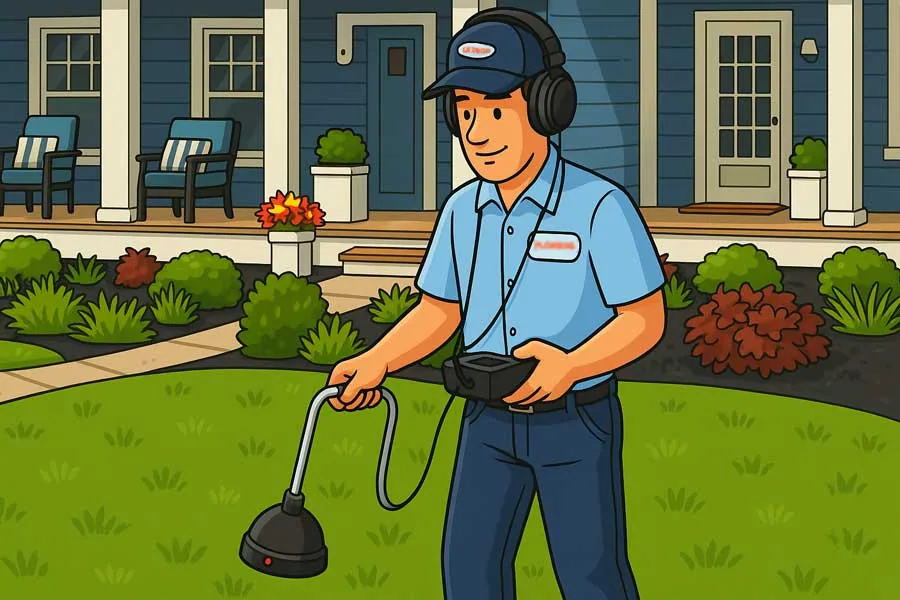
Acoustic listening. Pressurized water escaping through a pinhole makes a distinct sound. Technicians use amplified ground microphones and headphones to sweep the slab and compare readings from multiple points. The loudest, most consistent signal marks the repair area. Industry publications describe this method as the backbone of modern locating for under-slab leaks.
Thermal imaging. Infrared cameras visualize temperature differences on surfaces. A hot water leak often paints a warm plume along tile or concrete. Imaging helps map hot line routes and cross check acoustic readings. Building-science resources outline best practices for scanning so results are reliable.
Tracer gas and electronic sniffers. When background noise is high or the slab is thick, pros may isolate a section of pipe and safely pressurize with a non toxic tracer gas. Sensitive detectors find where the gas escapes through cracks or along wall plates.
Moisture mapping. Pin and pinless meters track moisture across flooring, baseboards, and drywall. A moisture gradient helps separate a localized plumbing leak from broader humidity or rain intrusion.
Pressure testing. With valves closed and sections isolated, a pressure gauge tells the truth. Loss of pressure confirms a leak on that loop. Combining tests reduces guesswork and limits demolition to the smallest area.
Good professional leak detection services end with a clear explanation, marked locations, photos, and a plan. You should know what is leaking, where it is, and the least invasive way to fix it.
Pool Leak Detection Services: Save Water, Save Your Deck
Pools and spas lose water to evaporation, splash-out, and backwashing. A true leak goes beyond normal loss. Signs include frequent autofill cycling, air bubbles at returns, shifting chemical balance, or wet spots near the equipment pad.
Fast homeowner tests: the bucket test to compare water loss inside a shaded bucket to the pool, and a dye test near suspected cracks while the system is off. If loss continues with the pump off, the shell may be leaking. If loss increases with the pump on, suspect plumbing lines or equipment.
What pros do: detailed pressure tests of suction and return lines, listening with hydrophones, and dye tracing at fittings and lights. Good pool leak detection services isolate the leak to a line or fitting so the repair is targeted and your deck stays intact.
Commercial Leak Detection Services for Shops, HOAs, and Restaurants
Commercial properties face unique challenges. Restaurants run long hours with hot, cold, and soda lines crisscrossing kitchens. Retail spaces and HOAs have large restrooms, long pipe runs, and after-hours quiet that makes leaks easier to find with acoustic gear.
Night audits. After close, meter readings and submeter data show if water is still flowing. If so, commercial leak detection services can isolate zones and track the source before doors open in the morning.
Documentation. Commercial clients should expect a written report with photos, pressure readings, and recommendations for repair and prevention. This supports budgeting, insurance, and maintenance planning.
Mapping, Isolation, and Choosing the Least Invasive Fix
Once the leak is confirmed, the goal is to fix it with the least demolition and the best long term value. Mapping matters. In many So Cal homes, hot lines run from the water heater across the slab to bathrooms and the kitchen. Cold lines may branch from a manifold or run along exterior walls and drop through the slab at each bathroom.
- Direct access is best when the leak is in a simple location and the rest of the line is healthy.
- Reroute above the slab when finishes are high value or the slab route is long and winding. Running new pipe through walls or attic avoids cutting concrete in living areas.
- Partial or whole home repipe when multiple leaks and aging lines make patching a short term fix.
Ask for side by side pricing for each path. A reputable team will explain tradeoffs clearly and never pressure you into a bigger job than you need.
Repair Paths: Direct Access, Reroute, or Repipe
Direct access spot repair. Open a small area of floor, chip the slab, expose the pipe, and replace a short section. Patch concrete, then restore the floor. This is fast when access is good.
Reroute above slab. New piping travels overhead or through walls to bypass the under-slab run. This keeps demolition away from living spaces and is common for hot lines under tile or wood floors.
Repipe for reliability. If the home has a history of pinhole leaks or the material is at the end of its life, a repipe can end repeated repairs. This choice adds wall patching and planning but removes under-slab risk.
For a deeper dive on repair decisions and timelines, visit Slab Leak Repair. If water is surfacing now, go straight to Emergency Plumbing Services.
Prevention Tips for So Cal Homes
- Control pressure. A working pressure regulator protects fixtures and pipes. Aim near 60 psi unless your fixtures require otherwise.
- Use braided stainless supply lines on sinks, toilets, and appliances. Replace rubber hoses on washers with braided lines and shut them off between uses if possible.
- Install smart water monitors. Automatic shutoff devices can detect abnormal flow and stop damage while you are away.
- Service irrigation and check backflow devices. Outdoor leaks can waste thousands of gallons and undermine concrete and hardscape.
- Keep records. Save photos and notes from any detection or repair. Knowing the pipe routes makes future work faster and cleaner.
FAQ: Clear Answers to Common Questions
How much does it cost to identify a leak?
Costs depend on access, house size, and tools required. Many single story slab homes fall in the low hundreds for a standard diagnostic visit that includes acoustic listening and thermal imaging. Complex cases that need tracer gas or multiple zones take longer and cost more. Ask what is included and whether the fee is credited toward the repair.
Do plumbers charge for leak detection?
Yes. Leak locating is skilled diagnostic work with specialized instruments. Most companies charge a flat diagnostic rate and apply a portion toward the repair when you hire them.
How can I detect a leak in my house?
Start with the water meter test. Shut off all fixtures and watch for movement. Isolate hot versus cold by turning off the water heater’s cold inlet. Listen for hissing, feel for warm tile, and look for flooring damage. If the meter moves, call professional leak detection services to pinpoint the exact spot.
Are leak detection companies worth it?
Yes. Accurate locating limits demolition, reduces time on site for repairs, and prevents opening the wrong area. The right team saves money by getting it right the first time.
How do plumbers detect hidden leaks?
They combine acoustic listening, thermal imaging, moisture mapping, and isolation pressure tests. In tricky cases they may use tracer gas. Together these methods mark the repair location within inches.
Will homeowners insurance cover a leaky pipe?
Policies usually cover sudden and accidental water damage. Gradual leaks and wear and tear are commonly excluded. Sewer backups often need a separate endorsement. Document everything, mitigate damage quickly, and call your carrier to review coverage for your specific situation.
How much should water leak detection cost?
Expect a professional fee that reflects home size, number of zones, and which instruments are needed. Simple single story homes cost less than multi story or commercial spaces. Ask if the price includes photos, a written report, and a repair credit.
What is the best DIY leak detection method?
The water meter test is the most reliable. With all fixtures off, any meter movement indicates flow. Dye testing toilets, shutting irrigation, and listening for hissing also help. Once you confirm a leak, a pro can pinpoint the exact location.
How to know if water is leaking behind a wall?
Look for staining, bubbling paint, swollen baseboards, or musty odors. Compare a suspect area to a known dry wall with a moisture meter. If you suspect a pressurized line, shut off that zone if possible and schedule detection before opening the wall.
Sources
EPA WaterSense: Fix a Leak Week tips for meter checks, https://www.epa.gov/watersense/fix-leak-week
Insurance Information Institute: Water damage coverage basics, https://www.iii.org/article/how-protect-your-home-water-damage
Insurance Information Institute: Sewer backup coverage, https://www.iii.org/article/protect-your-house-from-sewer-backups
Kiplinger: Water damage risks and exclusions overview, https://www.kiplinger.com/personal-finance/home-insurance/often-overlooked-water-damage-risks-homeowners-forget-about-and-why-insurance-wont-always-cover-them
PHCPPros: Acoustic leak detection industry coverage, https://www.phcppros.com/topics/255-leak-detection
IIBEC: Using thermal imaging for building diagnostics, https://iibec.org/publication-post/small-unmanned-aerial-system-applications-in-the-building-enclosure-industry-using-thermal-imaging-to-assess-building-performance-2/
AWWA: Water audits and loss control concepts, https://www.awwa.org/event/north-american-water-loss/