
Tree Roots in Your Sewer Line: Early Warning Signs and Fixes
When your toilet burps after a flush or your sinks start to drain like they are half asleep, it is easy to shrug it off as a random clog. Sometimes that is true. Other times, those are quiet hints that tree roots have found your sewer line and started moving in. Roots are relentless. They are drawn to the moisture and nutrients inside your pipes, and if there is even a hairline opening at a joint or crack, they will push through and spread.
The good news is that you can catch this early. The warning signs are consistent, a quick sewer camera inspection removes the guesswork, and the right plan can clear the line and keep roots from coming back. This guide explains what to look for, why cameras matter, how hydro jetting roots plus root control work together, and how to choose between trenchless lining and a small spot repair.
Table of Contents
- What Causes Roots To Invade Sewer Lines
- Early Warning Signs You Should Never Ignore
- Why a Sewer Camera Inspection Is the Turning Point
- Hydro Jetting Roots: Fast, Thorough Cleaning
- Root Control Treatments That Keep Roots From Rushing Back
- Lining vs Spot Repair: How To Choose The Right Fix
- Prevention and Maintenance You Can Start Today
- When To Call For Help
- FAQ: Straight Answers To Common Questions
- Sources
What Causes Roots To Invade Sewer Lines
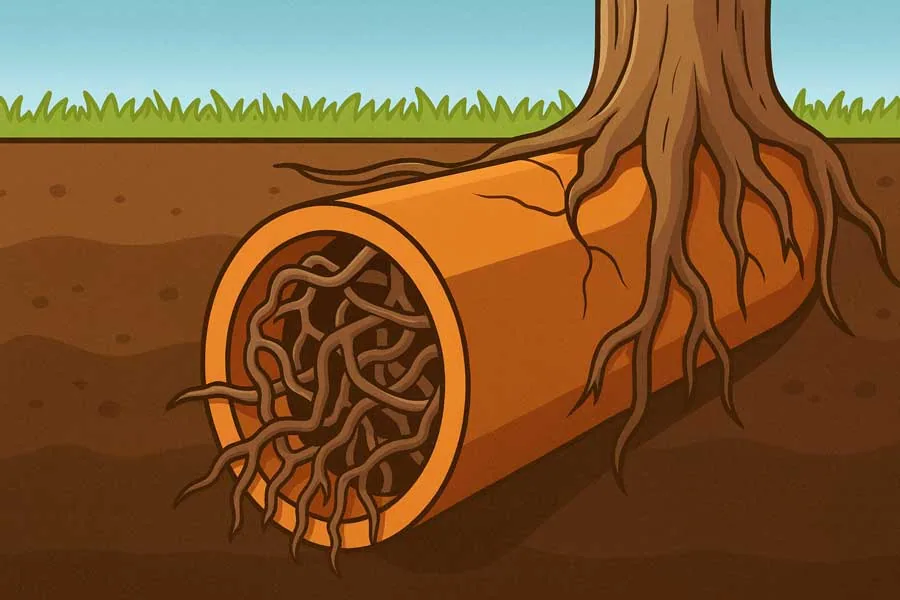
Roots do not magically punch through healthy, watertight pipe. They enter where a line is already vulnerable. Typical weak points include clay or concrete bell joints that have opened with age, tiny cracks from soil movement, failing gaskets or poorly sealed connections on older plastic lines, and corrosion in cast iron that leaves a rough interior. Once a hairlike root tip finds moisture, it sends more growth into the line. Those fine hairs tangle into a net that catches toilet paper, wipes, grease, and grit. The mass thickens until the line narrows and airflow is trapped. That is when the gurgling and slow drains begin.
Seasonal growth patterns play a role too. During cooler months and before spring leaf out, many plants concentrate energy in their roots. If a pipe joint is already weeping a little groundwater or vapor, roots will find it. Older neighborhoods with mature trees and original clay laterals are especially prone, but any aging line with a bad joint is fair game.
Early Warning Signs You Should Never Ignore
Toilet gurgle after a flush. That hollow glug or bubbling sound is air trying to escape through the bowl because the main line is partially blocked. Roots can pinch the pipe enough to trap air.
Several fixtures slowing at once. If a shower, a sink, and a toilet on the same side of the house start draining slowly around the same time, the restriction is usually further down the branch or in the main lateral.
Recurring clogs that come back fast. A quick snake may poke a hole through a root mat, but it will often close again within weeks. If you keep fighting the same clog, you are treating a symptom.
Sewer smell outside or a greener stripe of grass. A cracked line may seep, creating a soggy area or a bright green path along the pipe.
Backups during heavy water use. Laundry day, long showers, or a full house of guests can overwhelm a partially blocked line and push wastewater back into fixtures.
If two or more of these are happening, it is time to look inside the pipe.
Why a Sewer Camera Inspection Is the Turning Point
A sewer camera inspection is the difference between guessing and knowing. A small camera goes into your cleanout and travels the line while recording video. You see exactly what is inside the pipe, along with a distance counter and depth readings. That matters because you can find the exact spot where roots enter, learn whether there are cracks, offsets, or heavy scaling, and choose the right fix with confidence. You also get a video record for your files or for insurance conversations.
What you gain from scoping the line:
- Proof of the problem. See root mats, cracks, and offsets in real time.
- Accurate mapping. Distance and depth allow precise locating for targeted repairs.
- Right-first-time repairs. Avoid paying for the wrong fix or digging in the wrong place.
Most inspections are quick. You will know if hydro jetting is all you need right now, or if a structural repair like lining or a spot fix is the smarter long-term choice. A reputable plumber will share the footage and talk through each finding in plain language.
Hydro Jetting Roots: Fast, Thorough Cleaning
Hydro jetting uses a specialized nozzle and high-pressure water to scour the interior of the pipe. The nozzle is designed to pull itself forward while blasting water backward and forward. That pattern cuts through root masses, strips away greasy buildup, and flushes everything downstream to restore full diameter. Many homeowners are surprised at how quickly normal flow returns once the root hair and sludge are cleared.
What hydro jetting does well:
- Clears roots across the entire circumference. Not just a hole through the middle.
- Washes out grease, sludge, and scale. Reduces debris that would snag future waste.
- No digging. Uses existing cleanouts for access when available.
- Verifiable results. A post-jet camera pass confirms the pipe is fully open.
What hydro jetting does not do:
- It does not seal the entry point. If you have a crack or open joint, roots can return over time.
- It cannot fix a collapse or severe offset. In those cases, a structural repair is needed.
Because roots will try to regrow through the same opening, many homeowners pair hydro jetting with a foaming root control treatment and, when needed, a structural repair that seals the vulnerable spot. To learn more about jetting, visit our Hydro Jetting page.
Root Control Treatments That Keep Roots From Rushing Back
After jetting cuts roots inside the pipe, the remaining root stubs at the entry point are still alive. A professional foaming root treatment coats the pipe and targets those stubs so they die back and release their grip. Timing matters. Applying soon after mechanical cutting helps the roots absorb the treatment and slows regrowth.
What to know about root control products:
- Foams cling to pipe walls. This increases contact time where the roots were cut.
- Formulas vary. Your plumber will select a product that fits your pipe material and local rules.
- Maintenance, not a cure. Root control slows regrowth but does not repair cracks or gaps.
If the camera reveals a single bad joint or a longer stretch of defects, sealing the pipe with lining or fixing that exact spot is what turns a chronic problem into a permanent solution.
Lining vs Spot Repair: How To Choose The Right Fix
Once the camera shows where roots enter, you can match the repair to the problem. Here is how the two main options compare.
Trenchless Pipe Lining
Cured-in-place pipe lining creates a smooth, jointless inner layer inside your existing pipe. A resin-saturated liner is inserted, inflated to fit, and cured. The result seals cracks and stops roots at multiple joints in one shot.
- Best for: Multiple defects along a run, older clay with many joints, or when you want to avoid digging through landscaping, concrete, or finished floors.
- Pros: Seals many joints at once, minimal surface disruption, fast return to service, smoother interior that improves flow.
- Considerations: Not ideal for fully collapsed pipe or severe offsets that prevent liner insertion. Upfront cost is higher than fixing one short section.
Spot Repair
If the camera shows a single open joint, a small crack, or a short offset, a focused repair may be the best value. This can be done with a small excavation to replace a short section or a trenchless point repair patch that cures in place over a limited area.
- Best for: One or two known defects with good access.
- Pros: Targets the exact defect you saw on camera, often lower cost than lining an entire run, keeps more of your yard and hardscape intact if a trenchless patch is possible.
- Considerations: If many joints are compromised, spot repairs can add up over time compared with one trenchless liner.
How to choose: One or two defects with easy access usually point to spot repair. Multiple leaks or widespread intrusion in clay typically favors lining. Heavy corrosion in cast iron often pairs well with descaling and lining to restore flow and stop future snagging.
Prevention and Maintenance You Can Start Today
- Plant smarter. Avoid aggressive, thirsty species near your sewer lateral. Ask your nursery about root behavior before planting.
- Know your cleanouts. A two-way cleanout near the house makes inspections and maintenance faster and less expensive.
- Be kind to your drains. Keep wipes, grease, and heavy paper products out of the line, especially if you have older pipe.
- Schedule periodic checkups. Older clay, concrete, or cast iron lines benefit from a quick camera inspection every few years.
- Handle backups quickly. If you have a backup or a plumbing emergency, visit emergency plumbing services and call right away to limit damage and keep repair options open.
When To Call For Help
Call a professional if you have multiple fixtures slowing or backing up at once, recurring clogs that return within weeks, a toilet that gurgles after other drains are used, a sewer smell outdoors, or a soggy area along the sewer path. A quick sewer camera inspection will tell the story. From there, your options are clear. Many homeowners start with hydro jetting roots to restore service, add a foaming root treatment, then choose lining or a small spot repair to seal the entry point for good.
FAQ: Straight Answers To Common Questions
How to get rid of roots in your sewer line?
Start with a sewer camera inspection to confirm root intrusion and map locations. Hydro jetting removes the roots and restores flow. Follow it with a foaming root control treatment to kill remaining stubs. If the camera shows open joints or cracks, plan a trenchless liner or a spot repair to seal the entry point and prevent regrowth.
How serious are tree roots in a sewer line?
Moderately serious at first, very serious if ignored. Early on, roots cause slow drains and gurgling. Left alone, they thicken and trap debris until you get a full backup. They can also widen cracks and wash soil away, creating voids that lead to sinkage. Early detection keeps repairs simpler and less expensive.
How much does it cost to get roots out of a sewer line?
Costs vary by access, pipe condition, and length. Many homeowners pay a few hundred dollars for hydro jetting and a camera inspection. If you need a structural fix, a short spot repair is usually less than lining a full run, while trenchless lining is priced per foot. A transparent quote will be based on your camera footage, not guesswork.
Will homeowners insurance cover roots in a sewer line?
Policies differ. Many standard policies exclude damage from tree roots as a maintenance issue, but some carriers offer optional endorsements that cover limited sewer line repair or replacement. It is worth calling your insurer and asking about sewer or service line coverage. Keep your inspection video for documentation.
How do plumbers find roots in sewer lines?
They run a sewer camera from a cleanout and view the entire line. The video shows root mats, cracks, offsets, corrosion, and other defects. The camera head records distance and depth so the exact spot can be marked at ground level.
What is the best time of year to apply root killer?
Root control products can work year round, but many pros prefer fall through early spring because plants channel more energy to roots. Applying right after mechanical cutting helps the foam contact and be absorbed by the remaining root stubs.
How do plumbers clear tree roots?
For most residential lines, plumbers use hydro jetting to cut and flush roots, then follow with a camera to verify a clear line. If the pipe is damaged, they recommend trenchless lining or a focused spot repair to seal the entry point. Some situations may also call for periodic root control treatments as maintenance.
Can I sue my neighbor for tree roots?
Laws vary by state and city. In many places, you may trim roots that cross onto your property line, but liability depends on proof of damage and local ordinances. Start with documentation. Get a camera inspection and a written report. Then contact your city or a local attorney for guidance before taking action.
Do sewer line root killers work?
Yes, when used correctly and for the right purpose. Root killers are a maintenance tool. They reduce regrowth of small root intrusions and work best when applied after the line is mechanically cleared. They do not fix a crack or open joint. If the pipe is damaged, plan to seal it with lining or a spot repair.
Sources
EPA Septic and Sewer Line Basics, https://www.epa.gov/septic
Home Drain and Sewer FAQs, Municipal Guidance, https://www.portland.gov/bes/sewer-and-drainage
Cast Iron vs Clay Sewer Pipe Aging and Issues, https://www.phcppros.com/articles/18214-a-look-inside-aging-sewer-systems
Hydro Jetting Overview for Residential Lines, https://www.angi.com/articles/what-hydro-jetting.htm
Root Control Concepts for Sewer Laterals, https://extension.psu.edu/tree-roots-in-sewer-lines
Cured-In-Place Pipe (CIPP) Lining Basics, https://trenchlesstechnology.com/pipe-lining/
Service Line Coverage and Homeowner Policies, https://www.iii.org/article/does-homeowners-insurance-cover-sewer-line-damage