
Introduction
Hidden deep in walls or beneath floors, tankless water heaters are powerful but delicate pieces of equipment. Without routine care, your system can lose efficiency, develop scale buildup, or even shut down unexpectedly. For homeowners in Ventura and Santa Barbara counties, keeping a tankless water heater in prime condition means reliable hot water, lower energy bills, and a longer system lifespan. In this friendly guide we’ll cover maintenance tips from simple DIY checks to professional service recommendations. Let us help you become a tankless water heater maintenance pro so you can enjoy endless hot water with peace of mind.
How Tankless Water Heaters Work
Unlike traditional tank models that store hot water, tankless systems heat water on demand. When you open a hot water tap, cold water flows through a heat exchanger. A burner or heating element warms the water as it passes through. This on demand heating prevents standby heat loss common in storage tanks but requires routine maintenance. Scale and sediment can build on heat exchangers and flow sensors. Air intake and exhaust vents can clog over time. With regular care, you’ll keep your unit safe, reliable, and energy efficient.
Why Regular Maintenance Matters
Neglecting maintenance on a tankless water heater can lead to scale accumulation, restricted flow, or system shutdowns. When mineral deposits collect on the heat exchanger, the unit must work harder to heat water. That results in higher energy bills and less consistent hot water delivery. In the worst cases, sensors can fail, causing error codes and interruptions to service. By applying routine maintenance tasks, you’ll prevent common problems, reduce repair costs, and keep your system running smoothly for years.
Tools and Supplies You’ll Need
- Bucket with Hose Connection – For flushing the system with water
- Submersible Pump – To circulate vinegar or descaling solution
- Vinegar or Descaling Chemicals – To remove scale from the heat exchanger
- Screwdriver or Nut Driver – To open access panels
- Soft Brush or Cloth – For cleaning burners, vents, and sensors
- Manufacturer Manual – For unit specific maintenance instructions
- Rubber Gloves and Safety Glasses – To protect yourself during cleaning
- Replacement Filters or Screens – If your model has removable inlet filters
Step 1 Flush the System
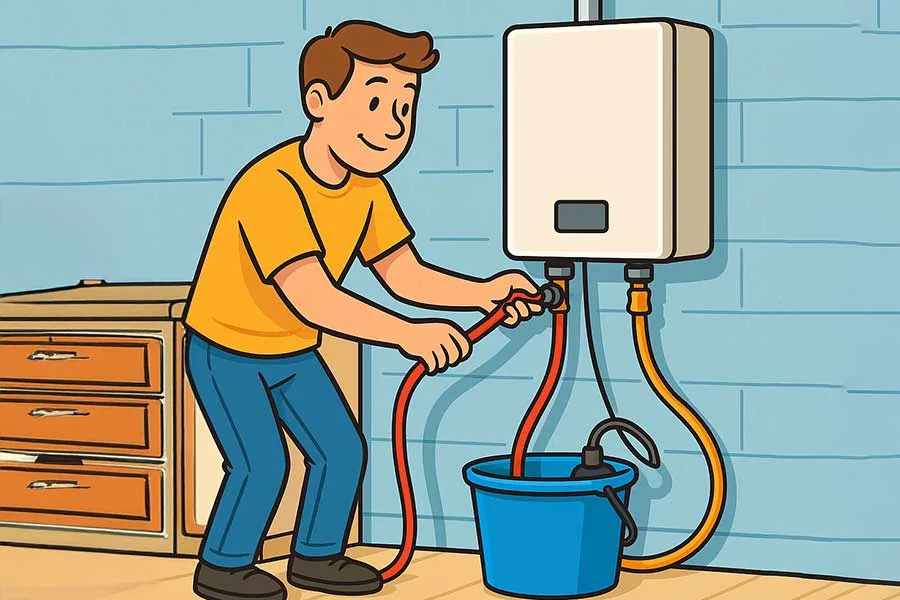
Flushing your tankless water heater removes mineral deposits and sediment from the heat exchanger. Most manufacturers recommend flushing once a year but if you have hard water you may wish to flush every six months. To flush your system you will need a bucket, submersible pump, and either white vinegar or a specially designed descaling solution. Follow these steps:
- Turn Off Power and Gas – Switch off the breaker for electric models or close the gas valve on gas units. Ensure the unit is cool before proceeding
- Shut Off Water Valves – Close the inlet and outlet water valves on your tankless unit
- Connect Hoses – Attach hoses to the inlet and outlet service ports. Place the submersible pump in the bucket filled with vinegar or descaling solution. Connect the hose from the pump to the inlet service port. Connect the outlet hose to return the liquid to the bucket
- Circulate Solution – Turn on the pump and allow the solution to circulate through the unit for 45 to 60 minutes. This will dissolve scale inside the heat exchanger
- Flush with Clean Water – After circulating the descaling solution, close the service ports and flush the system with clean water for five minutes to remove any residue
- Restore Connections – Disconnect hoses, reopen the water valves and power the unit back on. Run hot water at a tap until water temperature stabilizes
This thorough flush will prolong the life of your heat exchanger and maintain efficient operation.
Step 2 Clean the Water Filter
Many tankless water heaters have an inlet filter to catch debris before water enters the heat exchanger. Over time, paper from plumbing repairs, mineral particles, or small bits of sand can clog that filter. A clogged filter reduces water flow and can trigger error codes. Cleaning the filter takes only a few minutes:
- Locate the Filter Housing – Check your manual for the filter location. It is usually near the cold water inlet pipe
- Turn Off Water Supply – Close the isolation valve on the inlet side
- Open Filter Cover – Use a screwdriver or nut driver to remove the cover or cap
- Remove and Rinse Filter – Take out the screen or mesh filter and rinse it under running water. Use a soft brush to dislodge stubborn debris
- Reinstall Filter – Place the filter back in its housing and secure the cover. Slowly open the inlet valve and check for leaks
Regular filter cleaning ensures proper flow and prevents your tankless water heater from overworking.
Step 3 Inspect the Heat Exchanger
Visual inspection of the heat exchanger chamber can help detect early signs of scale buildup or corrosion. While some models allow direct access for inspection, others may require a trained technician. If your model has a removable cover:
- Turn Off Power and Water – Ensure the unit is powered down and water supply is shut off
- Remove Access Panel – Carefully remove the screws holding the panel and set the panel aside
- Inspect for Scale – Look for white or brown crusty deposits on the heat exchanger tubes. Light scale can be wiped away. Heavy buildup may require additional descaling
- Check for Corrosion – Rust or pitting indicates corrosion which reduces efficiency and may lead to leaks. Contact our team if you spot corrosion
- Reassemble Unit – Replace the panel and secure it with screws. Restore power and water supply
Keeping the heat exchanger clean is the key to maintaining efficiency and avoiding costly repairs down the road.
Step 4 Check the Venting System
Proper venting is crucial for gas tankless water heaters. Blocked or damaged vents can cause dangerous carbon monoxide buildup or reduce system performance. Inspect your venting system at least once a year:
- Examine the Exterior Vent Cap – Look for debris, nests, or corrosion on the vent cap outside your home. Clear any obstructions such as leaves or animal nests
- Inspect Vent Piping – Check interior vent pipes for damage, dents, or misalignment. A loose joint can allow exhaust gases to leak
- Clean Vent Screens – Some models have insect screens that can clog. Use a soft brush to remove dust and debris
- Test Vent Fan Operation – On models with a blower, verify the fan runs quietly and reaches operating speed within seconds of ignition
If you find venting issues our professional technicians can repair or replace vent components to ensure safe operation.
Step 5 Examine Gas and Water Lines
Leaks in gas or water supply lines pose safety and health risks. Routine visual inspection helps catch issues early:
- Look for Signs of Corrosion – Metal fittings and valves can corrode over time. Replace corroded fittings before they fail
- Check for Leaks – After cleaning or descaling, watch all connections for drips. A soap and water solution on gas lines can help detect small leaks by forming bubbles
- Verify Secure Connections – Ensure all compression fittings and unions are tight. Avoid over tightening which can strip threads
- Examine Flexible Hoses – If your heater uses flex hoses, check for wear or kinks. Replace hoses older than five years
Maintaining your gas and water lines reduces the risk of hazards and maintains reliable performance.
Step 6 Test Safety Devices and Error Codes
Tankless water heaters come with built in safety features such as overheat sensors and flame failure devices. Periodic testing confirms these devices operate correctly:
- Simulate Low Water Flow – Many units shut down at low flow. Reduce faucet flow to the minimum hot water setting and verify the unit does not flash an error code
- Trigger Overheat Cutout – Consult your manual for manual testing procedures. Some models allow you to temporarily override settings to test the sensor
- Review the Control Panel – Clear any stored error codes and cycle power. If codes reappear note the code number and consult our Tankless Water Heaters page for troubleshooting tips
Proper safety device operation ensures safe hot water delivery and compliance with building codes.
Step 7 Monitor Water Quality
Water quality directly impacts the lifespan of your tankless water heater. Hard water high in minerals accelerates scale formation. Consider these practices:
- Test Water Hardness – Use test strips available at home improvement stores. A hardness above seven grains per gallon may warrant a water softener
- Install a Pre Filter – A sediment filter on the cold water supply stops sand and debris from entering the heat exchanger
- Consider Whole House Water Treatment – A water softener or conditioning system reduces scale and extends the intervals between maintenance
- Flush Sediment Regularly – If your water contains fine particles flush pre filters monthly to prevent filter clogging
Monitoring and treating water quality protects your investment and ensures consistent hot water performance.
Scheduling Professional Maintenance
While many maintenance tasks are DIY friendly, some require professional expertise and specialized tools. Smart Choice Plumbing & Drains offers comprehensive maintenance plans for tankless water heaters in Ventura and Santa Barbara counties:
- Annual Professional Flush – Our technicians use commercial grade pumps and descaling agents to restore peak efficiency
- Advanced Diagnostics – We use thermal imaging and flow testing to detect hidden issues before they escalate
- Manufacturer Warranty Compliance – Professional service keeps your warranty valid and covers manufacturer recommended procedures
- Priority Service Calls – Maintenance plan members receive priority scheduling and discounted repairs
Visit our Tankless Water Heaters page or Contact us to enroll in a maintenance plan that keeps your system running strong.
Conclusion
Caring for your tankless water heater does not have to be intimidating. With a clear schedule that includes flushing the system, cleaning filters, inspecting vents, and testing safety devices, you’ll keep your hot water flowing and your energy bills in check. Monitoring water quality and scheduling professional maintenance ensures your unit lasts for a decade or more. For expert support and local service, Smart Choice Plumbing & Drains stands ready to help homeowners in Ventura and Santa Barbara counties. Let us partner with you to get the most from your tankless water heater.