
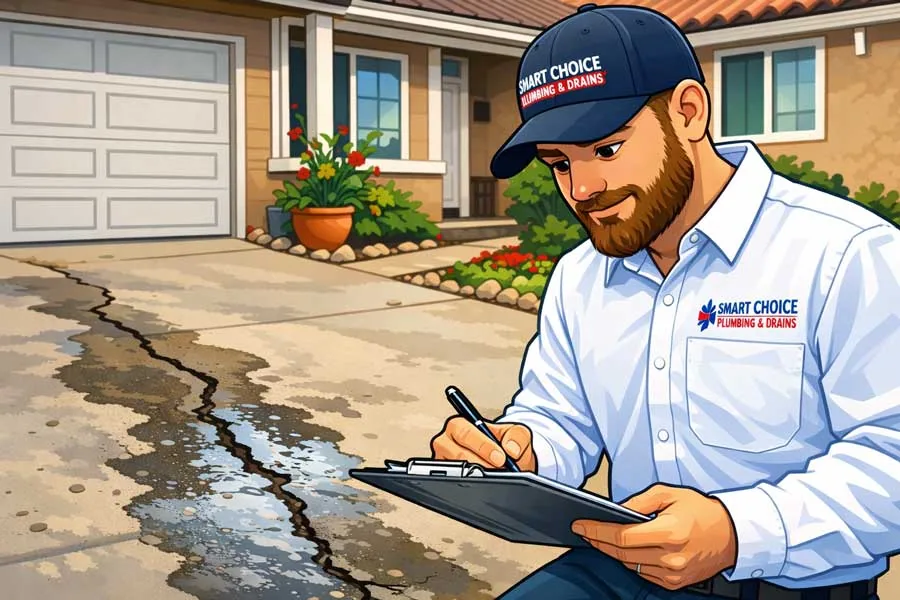
Ventura Plumbing Issues: 4 Big Problems You Shouldn’t Ignore
Most plumbing problems are annoying. A few are genuinely high-risk. This post covers the four ventura plumbing issues that can create health hazards, structural damage, or huge cleanup bills if they’re ignored in Ventura, California.
You’ll learn what each problem looks like early, what to do first, and how to reduce the odds it happens to your home. If you need help right now, Smart Choice Plumbing & Drains offers 24/7 emergency plumbing service in Ventura and nearby areas.
Table of Contents
- Why These Four Issues Hit Ventura Homes Hard
- 1) Main Sewer Line Backup or Failure
- 2) Slab Leaks and Major Supply-Line Leaks
- 3) Earthquake-Driven Pipe Breaks and Ground Failure
- 4) Backflow and Cross-Connection Risk
- Local Success Story: Preventing a Backup in Midtown
- Prevention Checklist for Ventura Homes
- When to Call a Pro
- Sources
- Make the Smart Choice for Ventura Plumbing Issues
Why These Four Issues Hit Ventura Homes Hard
Ventura has a mix of older neighborhoods, mature landscaping, coastal exposure, and earthquake realities. That combination means some problems go from “small” to “serious” quickly.
- Older pipes: some homes still have aging sewer laterals or supply lines that are more vulnerable to cracks, scaling, and joint movement.
- Tree roots: roots love the moisture around sewer joints and can turn one weak spot into a recurring clog.
- Coastal conditions: salty air and humidity can speed up corrosion on exposed metal components, especially near the ocean.
- Seismic risk: Ventura County and the City of Ventura identify liquefaction concerns in specific areas, which matters because ground failure can damage buried water and sewer lines.
If you want a local team that works Ventura daily, here’s the city page for the plumber Ventura trusts. You can also explore residential plumbing and commercial plumbing options.
1) Main Sewer Line Backup or Failure
A sewer backup is one of the most serious ventura plumbing issues because it can bring untreated sewage into living space. Once that happens, you’re no longer dealing with “a clog.” You’re dealing with contamination, damaged building materials, and the possibility of professional restoration.
Common Ventura-area causes include:
- Tree root intrusion: roots enter tiny joint gaps and expand, snagging debris until the line blocks.
- Grease and wipes: fats harden in pipes; so-called “flushable” wipes often do not break down like toilet paper.
- Older pipe materials: clay can crack and shift; cast iron can corrode and scale, reducing the inside diameter.
- Bellies and offsets: a sagging or separated section holds waste and turns into repeat clogs.
Early warning signs usually show up before the disaster moment:
- Multiple fixtures backing up: for example, toilet plus shower plus sink.
- Gurgling drains: air trapped behind a blockage escapes through fixtures.
- Sewer odors: persistent smells indoors or near an exterior cleanout.
- Backups at the lowest drain: the first-floor shower, tub, or floor drain often shows it first.
What to do first if you suspect a main line backup:
- Stop using water: every flush or sink load pushes more toward the blockage.
- Keep people and pets away: treat the area as contaminated.
- Call for emergency help: a licensed plumber can clear the line, confirm the cause, and reduce the risk of repeat backups.
One important safety note: if you have an active backup, do not run the dishwasher, washing machine, or any “big water” appliance. It can overwhelm the line and push sewage higher and farther into the home. If sewage has entered living space, treat cleanup as hazardous. A plumber can stop the source and advise next steps, but you may also need professional water-damage restoration for porous materials like carpet padding or drywall.
How the root cause is confirmed: a sewer camera inspection is the best next step once the line can be viewed. It shows whether the problem is roots, collapse, a belly, or a damaged joint.
Prevention that actually helps: don’t pour grease down drains, avoid wipes, and consider a camera inspection if your home is older or you’ve had more than one “mystery clog.” Catching root intrusion early is far cheaper than dealing with a collapse and cleanup. That’s why this stays high on any list of serious ventura plumbing issues.
2) Slab Leaks and Major Supply-Line Leaks
Slab leaks are leaks in water lines under a concrete slab. Major supply-line leaks can also occur inside walls, ceilings, crawlspaces, or yards. The danger is similar: water runs where you can’t see it, for longer than you realize.
These ventura plumbing issues are costly because they can soak flooring, drywall, insulation, and framing. Moisture also raises the risk of mold and lingering odor if drying is delayed.
Common causes include:
- Corrosion or aging fittings: pinhole leaks and failed joints are common in older systems.
- Abrasion: pipes can rub against concrete or rebar as they expand and contract.
- High water pressure: pressure that stays high stresses valves and joints over time.
- Minor ground movement: even small shifts can fatigue joints.
Warning signs homeowners can spot:
- Unexplained water bill jump: especially if it happens suddenly.
- Sound of running water: when all fixtures are off.
- Warm floor spots: often a clue on hot water lines.
- Musty smells, damp flooring, or warped boards: moisture under floors can show up as cupping or soft spots.
- Lower pressure at multiple fixtures: can happen with a large leak.
What to do first when you suspect a hidden supply leak:
- Shut off the main water valve if the leak seems active or you see spreading moisture.
- Turn off the water heater if you suspect a hot-side leak and the system is losing water.
- Call a plumber for leak detection: modern tools can locate many leaks with far less guessing and unnecessary demolition.
How to reduce risk: check your water pressure, replace aging supply lines and shutoff valves before they fail, and consider smart leak sensors near the water heater, laundry, and under sinks. If you’ve had repeated pinhole leaks, repiping may be the most cost-effective long-term fix, and financing options can help spread that cost out.
3) Earthquake-Driven Pipe Breaks and Ground Failure
Earthquakes are not frequent, but when they happen they can trigger multiple ventura plumbing issues at once. There’s the shaking itself, plus the possibility of ground failure. Ventura County planning materials highlight liquefaction as a local concern, and the City of Ventura provides liquefaction hazard mapping for parts of the city. In those areas, strong shaking can reduce soil strength and shift buried pipes.
What tends to fail during strong shaking:
- Rigid connections and older brittle sections: tight fittings and older materials are more likely to crack.
- Water heater connections: an unstrapped heater can move enough to stress supply lines.
- Underground supply lines at transition points: near the meter, or where the line enters the home.
- Sewer laterals: joints can separate, creating repeat clogs or soil intrusion afterward.
What to do after a significant quake:
- Check for obvious leaks: pooling water, wet soil near the meter, or a steady hissing sound.
- Shut off water if needed: if you see a break, shut it down at the main and call for help.
- Pay attention to drains: sudden new backups after shaking can point to a shifted sewer lateral.
Smart prep that pays off: strap the water heater, keep a shutoff wrench accessible if your valve needs one, and consider an inspection after major shaking even if you don’t see immediate flooding. A small crack can become a major leak later.
4) Backflow and Cross-Connection Risk
Backflow is when water flows in the wrong direction, potentially pulling contaminants into the drinking water system. A cross-connection is the setup that makes that contamination possible, like a hose submerged in a chemical bucket, an irrigation system without proper protection, or a connection between potable and non-potable water that lacks an approved device.
This is one of the most serious ventura plumbing issues because it can affect potable water safety. California requires water suppliers to run cross-connection control programs, and Ventura Water maintains a backflow and cross-connection program with device requirements and testing rules for certain properties.
How backflow happens:
- Back-siphonage: a sudden pressure drop (like a main break or firefighting demand) pulls water backward.
- Back-pressure: a pump or system pressure on-site pushes water the wrong way.
Simple homeowner habits that reduce risk:
- Never leave a hose submerged: keep the hose end above the waterline in pools, buckets, and tubs.
- Use the right protection outdoors: hose bib vacuum breakers and approved irrigation backflow devices where required.
- Don’t DIY a “quick tie-in”: plumbing changes can accidentally create an unprotected cross-connection.
For property managers and businesses, backflow compliance should be planned, not rushed. If you’re dealing with upgrades or compliance repairs, Smart Choice Plumbing & Drains can help you map out a practical plan and, when helpful, use financing options for larger work.
Local Success Story: Preventing a Backup in Midtown
A Midtown Ventura homeowner called because the toilet gurgled and the shower drained slowly on and off. They had tried a store drain chemical, which didn’t help. The clue was multiple fixtures acting up, which often points to the main line rather than a single drain.
We cleared the blockage and ran a camera. The line showed root intrusion at a joint and a slight offset that created a snag point. They were likely days away from a full backup into the shower. The homeowner chose a spot repair of the damaged section, and the repeat clogs stopped. No sewage entered the home, and there was no restoration work. That’s the goal with these ventura plumbing issues: catch the warning signs early and skip the disaster.
Prevention Checklist for Ventura Homes
You can’t prevent every problem, but you can cut your risk substantially with a few steps.
- Know your shutoffs: main water shutoff, water heater shutoff, and any irrigation shutoffs.
- Be strict about drains: no grease, no wipes, and keep hair and food scraps out of sinks and tubs.
- Consider a sewer camera inspection: especially for older homes, repeat clogs, or large trees.
- Check water pressure: high pressure shortens the life of valves, fittings, and supply lines.
- Install leak sensors: water heater, laundry area, under sinks.
- Strap the water heater: simple earthquake prep that protects connected lines.
- Keep hoses out of standing water: backflow prevention starts with everyday habits.
When to Call a Pro
Call a licensed plumber promptly if you notice any of these warning signs:
- Sewage smell indoors or any backup in a shower, tub, or floor drain.
- Water bill spikes paired with damp spots, warm floors, or running-water sounds.
- Post-earthquake changes like new leaks, wet soil near the meter, or sudden drain problems.
- Backflow concerns such as missing irrigation protection or notices to test backflow devices.
If you’re dealing with an urgent situation, start with Emergency Plumbing Service. If you’re planning upgrades, explore Residential Plumbing, Commercial Plumbing, and financing options. For more local coverage, visit Areas We Serve.
Need help now? Call Smart Choice Plumbing & Drains at (805) 340-1810.
Sources
-
- Certified Sanitary Sewer Systems General Order (WQO 2022-0103-DWQ) | California State Water Resources Control Board (PDF)
- Guidelines for Cleaning Safely After a Disaster (sewage precautions) | CDC
- A Brief Guide to Mold, Moisture and Your Home | U.S. EPA
- A Brief Guide to Mold in the Workplace (moisture control guidance) | OSHA
- Geologic and Seismic Hazards | Ventura County General Plan
- Liquefaction Hazard Areas | City of Ventura (PDF)
- Backflow & Cross-Connection | City of Ventura (Ventura Water)
- Cross-Connection Control Policy Handbook (CCCPH) | California State Water Resources Control Board
- Drinking Water Regulations (cross-connection control provisions) | California State Water Resources Control Board (PDF)