
Table of Contents
- Introduction
- What a Water Pressure Regulator Does
- Why California Homes Benefit Most
- What Good Water Pressure Looks Like
- Signs Your Water Pressure Regulator Might Be Failing
- How to Test and Adjust a Water Pressure Regulator
- How a Water Pressure Regulator Protects Your Home
- Replacement Costs and Budget Tips
- Local Story
- FAQ
- Need Help Today
- Sources
Introduction
If you have ever noticed a banging pipe, a toilet fill valve that keeps hissing, or a water heater relief line that occasionally drips, high water pressure may be the quiet culprit. A Water Pressure Regulator keeps your home’s plumbing in a safe, comfortable range so fixtures last longer, leaks are less likely, and your water system behaves the way it should. In California, where neighborhood pressures can swing with hills, large mains, irrigation cycles, and nightly demand changes, a properly sized and tuned regulator is not just nice to have. It is smart protection for your home and your budget.
What a Water Pressure Regulator Does
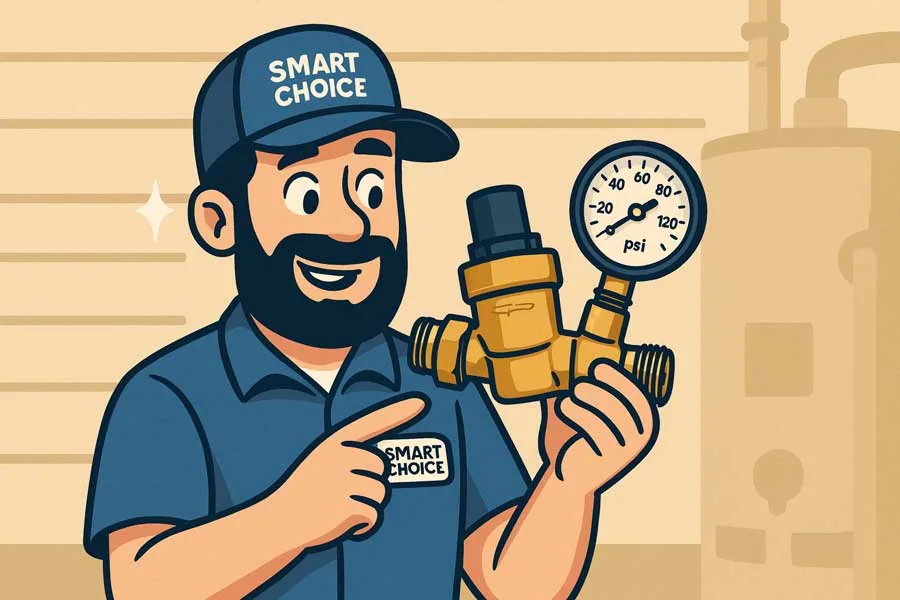
A Water Pressure Regulator is a valve installed on your main cold water line. Inside the body are a spring and diaphragm that sense downstream pressure. When pressure rises above the set point, the valve closes a bit to reduce flow. When pressure drops, it opens to maintain the set point. The result is steady, manageable pressure to every faucet, shower, toilet, and appliance. Most residential regulators are adjustable and are factory preset around 50 to 60 psi.
Think of it like cruise control for your plumbing. Without a regulator, city supply pressure can arrive at well over 80 psi, especially at night when fewer people are using water. That level feels strong at the shower, but it beats up washers, seals, and valve cartridges. With a regulator, pressure is tamed before it ever reaches your fixtures.
Why California Homes Benefit Most
California terrain and infrastructure create big swings in service pressure. Many communities also enforce codes that limit pressure inside buildings. The Uniform Plumbing Code, which is adopted across California, limits static pressure inside a building to 80 psi and requires a Water Pressure Regulator whenever incoming pressure can exceed that limit. Los Angeles specifically notes the 80 psi threshold and typically recommends a setting between about 50 and 70 psi for homes. These standards exist to protect appliances, valves, and piping from unnecessary stress that leads to leaks and premature failure.
Coastal hills, foothill neighborhoods, and older water districts can all show high service pressure. Some California utilities even caution that customers should expect periodic pressures above 80 psi and therefore must install and maintain a regulator to keep household pressure in check. If you are unsure about your area, a quick test with a small pressure gauge on an outdoor hose bib will tell the truth within seconds.
What Good Water Pressure Looks Like
Most homes feel great at 50 to 60 psi. That range provides strong showers, steady appliance performance, and less wear on seals and valves. Many manufacturers, water agencies, and buyer guides point to the 40 to 60 psi range as normal, with an upper safety limit of 80 psi. Keeping your Water Pressure Regulator tuned in that sweet spot helps fixtures last and reduces nuisance issues like water hammer and leaking supply lines.
If you regularly see more than 80 psi on a gauge, it is time to act. Long term high pressure is one of the most common causes of sudden leaks at braided sink supplies, toilet fill valves, and washing machine hoses. It can also cause your water heater’s temperature and pressure relief valve to open and drip.
Signs Your Water Pressure Regulator Might Be Failing
A regulator can work perfectly for years, then slowly drift out of spec as the inner parts wear. Here are practical signs to watch for.
- Fluctuating pressure. Showers that surge or drop for no clear reason can indicate a sticking diaphragm or a worn spring in the Water Pressure Regulator.
- High readings on a gauge. If your hose bib gauge shows 80 psi or more at quiet times, the regulator is not doing its job or may be misadjusted.
- Frequent valve or hose failures. Replacing faucet cartridges, toilet fill valves, or washing machine hoses more often than expected is a red flag for excess pressure.
- Relief valve drips. A water heater T and P valve that drips without a temperature issue may be reacting to pressure spikes that a healthy regulator would prevent.
- Water hammer and noisy pipes. While hammer can have several causes, unchecked high pressure makes it worse and more frequent.
How to Test and Adjust a Water Pressure Regulator
Testing is simple and safe for most homeowners. Adjustments are also straightforward if access is good and the valve is in decent shape. If anything feels uncertain, we are happy to help.
Step 1: Measure your pressure
Pick up a small pressure gauge that threads onto a hose bib or laundry faucet. With all fixtures off, attach the gauge and open the valve. Read the number after a minute. Repeat in the early morning or late evening when pressure tends to be highest. If you see readings well above 60 psi, consider a small adjustment. If you see readings at or above 80 psi, plan to repair or replace the Water Pressure Regulator soon.
Step 2: Find the regulator and the adjustment screw
Your regulator is usually near the main shutoff, just after the water meter or where the service line enters the house. Most models have a hex or slotted adjustment screw on top with a locknut. Have your gauge in place where you can see it while adjusting.
Step 3: Make a small adjustment
Loosen the locknut slightly. Turn the adjustment screw clockwise to increase pressure or counterclockwise to decrease. Make quarter turns, then open a nearby faucet for a few seconds and close it. Recheck the gauge. Aim for about 50 to 60 psi for most homes. Tighten the locknut when done. If pressure will not change or swings wildly, the Water Pressure Regulator may be failing and should be replaced.
Step 4: Consider an expansion tank
Many California homes have closed systems due to backflow devices. Thermal expansion from your water heater can temporarily push pressure above your set point. A small expansion tank on the cold line to the water heater protects against those spikes. If your regulator is healthy but the gauge still climbs during water heating cycles, ask us to check your expansion tank.
How a Water Pressure Regulator Protects Your Home
Your Water Pressure Regulator works quietly, but its benefits are big.
- Prevents leaks and bursts. Lower, steady pressure puts less force on hoses, fittings, and solder joints. That reduces the odds of surprise leaks.
- Extends fixture life. Cartridges, seals, and fill valves last longer when pressure is controlled.
- Reduces water hammer and noise. A steady set point helps calm pressure waves that cause banging pipes.
- Protects appliances. Dishwashers, ice makers, and washing machines are built for moderate pressure. A good regulator keeps them in their comfort zone.
- Supports code compliance. California plumbing codes limit building pressure to 80 psi. A working regulator helps you comply and avoid damage associated with high pressure.
Replacement Costs and Budget Tips
Prices vary by model, location, and access. National cost guides report typical replacements in the two to seven hundred dollar range, with higher costs when access is tight or when additional work is needed. In California, costs can be on the higher end in hillside or tight mechanical spaces. If your regulator is older than ten years or stuck at a very high setting, replacement is usually the better long term choice than repeated adjustments.
To make timing easier, we offer flexible options through Smart Choice Plumbing Financing. If you are seeing extreme pressure or an active leak at the regulator, visit our 24/7 Emergency Plumbing page and we will get you on the schedule quickly. If you are simply planning ahead, browse our Areas We Serve and we will confirm a convenient appointment time.
Local Story
A homeowner in a hillside neighborhood called after two supply hoses failed within a year. Our tech found 95 psi static pressure in the morning and over 110 psi late at night. The existing Water Pressure Regulator was stuck open. We replaced the regulator, adjusted to 55 psi, and added a small expansion tank at the water heater. The new setup eliminated nuisance drips and the home’s gauges now read steady numbers day and night. The family noticed quieter pipes and better control at the shower, and they stopped replacing valves and hoses.
FAQ
How do I tell if my water pressure regulator is bad?
Attach a small gauge to a hose bib and test during quiet hours. If you see 80 psi or more, the Water Pressure Regulator is not limiting pressure. Other clues include surging showers, banging pipes, running toilets, and frequent failures of faucet or toilet parts. If small adjustments do not hold a steady set point, the internal spring and diaphragm may be worn and the valve should be replaced.
How do I adjust my water pressure regulator?
Loosen the locknut on top. Turn the screw clockwise to raise pressure or counterclockwise to lower. Make small quarter turns and recheck a hose bib gauge after each change. Aim for 50 to 60 psi for most homes. If pressure does not respond or swings, schedule a replacement. Always keep safety in mind and call a pro if access is tight or corrosion is severe.
Do I really need a water pressure regulator?
Yes if your incoming pressure can exceed 80 psi, which is common in many California neighborhoods. Codes limit in-home static pressure to 80 psi and require a Water Pressure Regulator in those situations. Even below that threshold, most homes feel best and experience fewer problems at 50 to 60 psi, which a regulator maintains automatically.
How much does it cost to replace a water pressure regulator?
Most homes fall between about two hundred and seven hundred dollars for a straightforward replacement, depending on access, pipe size, and local labor rates. Costs rise when additional work is needed, such as replacing a stuck main shutoff, adding a pressure reducing valve where none existed, or adding a nearby electrical outlet for smart gauges. We provide clear estimates before work begins and offer Smart Choice Plumbing Financing to spread out payments if you prefer.
Need Help Today
If your gauge shows high numbers or your plumbing has been acting up, we can test, adjust, or replace your Water Pressure Regulator and get everything back in the safe zone. For urgent problems or active leaks, use our 24/7 Emergency Plumbing page. To confirm coverage in your neighborhood, check our Areas We Serve. If you want to plan an upgrade without a large upfront cost, visit Smart Choice Plumbing Financing.
Sources
Los Angeles Department of Water and Power. Water Pressure guidance. https://www.ladwp.com/construction-services/water-services/water-pressure
IAPMO Code Spotlight. UPC 608.2 Excessive Water Pressure. https://forms.iapmo.org/email_marketing/codespotlight/2018/Jan4.htm
City of Napa. Pressure Regulators fact sheet. https://www.cityofnapa.org/DocumentCenter/View/2491/Pressure-Regulators-PDF?bidId=
City of Santa Barbara. Water Pressure Regulators. https://santabarbaraca.gov/pressureregulator
Western Municipal Water District. Water Pressure Questions. https://westernwaterca.gov/116/Water-Pressure-Questions
EPA WaterSense. Service Water Pressure Technical Sheet. https://www.epa.gov/system/files/documents/2023-08/ws-homes-TRM-12-ServiceWaterPressureTechSheet.pdf
HomeAdvisor. Water Pressure Regulator Replacement Cost. https://www.homeadvisor.com/cost/plumbing/replace-water-pressure-regulator/
Angi. How Much Does a Water Pressure Regulator Replacement Cost. https://www.angi.com/articles/water-pressure-regulator-replacement-cost.htm
Watts. PRV Adjustment Instructions. https://www.watts.com/dfsmedia/0533dbba17714b1ab581ab07a4cbb521/34390-source/638818143540000000/1915945.pdf
Grundfos. How to check water pressure. https://www.grundfos.com/us/learn/research-and-insights/how-to-check-water-pressure
Internal links open in the same window. External links open in a new window.