
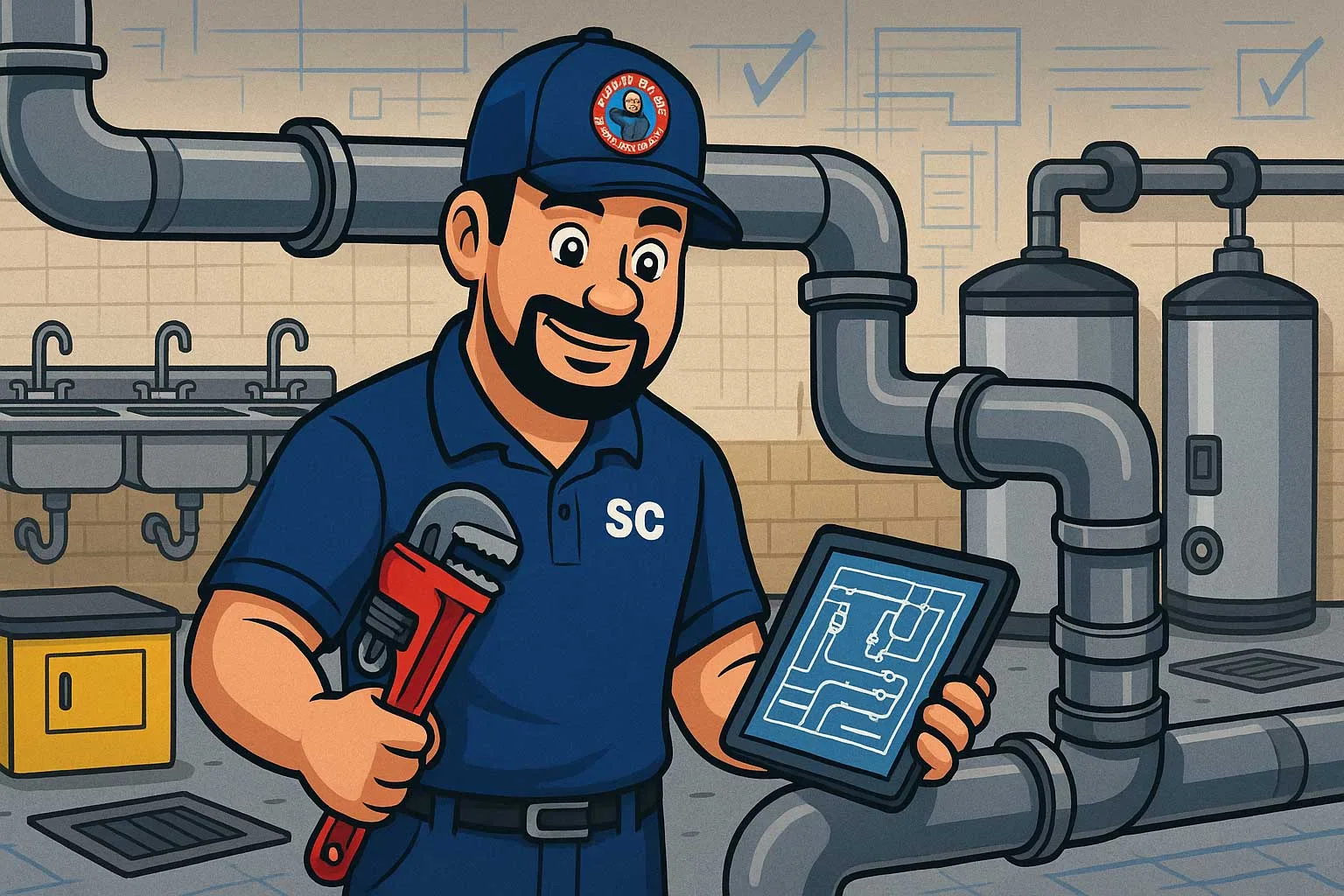
What Does Commercial Plumbing Mean?
Commercial plumbing refers to the specialized trade of installing, repairing, and maintaining plumbing systems in non-residential buildings, places such as office complexes, retail centers, industrial facilities, restaurants, schools, and multi-unit apartment buildings. Unlike plumbing in single-family homes, commercial plumbing must accommodate higher flow rates, heavier usage, and stricter health and safety regulations. From grease interceptor installations under restaurant sinks to high-capacity water heater systems for apartment complexes, commercial plumbers address unique challenges that arise when water supply and waste removal serve dozens or hundreds of occupants rather than a single household.
At Smart Choice Plumbing & Drains, our commercial plumbing experts design, diagnose, and deliver solutions that keep businesses running smoothly. In this comprehensive guide, we’ll explain the fundamental differences between commercial and residential plumbing, define what falls under the umbrella of commercial services, break down typical costs, and clarify when commercial landlords bear responsibility for plumbing maintenance.
Understanding Commercial Plumbing
Commercial plumbing encompasses a broad range of services performed in buildings designed for business or public use. Key characteristics include:
- Larger-Scale Systems – Pipes, pumps, and fixtures sized for high volume and frequent use.
- Specialized Fixtures – Commercial toilets, urinals, multi-station faucets, and heavy-duty floor drains.
- Regulatory Compliance – Adherence to health codes, ADA requirements, and local building department standards.
- Preventive Maintenance – Scheduled inspections, grease trap cleanings, and backflow prevention testing to avoid downtime.
- Advanced Diagnostics – Video camera pipe inspections and hydro-jetting to locate and clear blockages without extensive demolition.
By focusing on these specialized needs, commercial plumbing professionals ensure that restaurants can safely dispose of fats, oils, and grease; that high-rise offices maintain adequate water pressure; and that retail centers prevent costly flooding or backups.
What’s the Difference Between Commercial Plumbing and Residential Plumbing?
While both commercial and residential plumbers share a foundation in pipefitting, fixture installation, and leak repair, several key differences distinguish the two trades:
- System Complexity – Residential plumbing typically serves one kitchen, one or two bathrooms, and standard appliances. Commercial plumbing systems may include dozens of restrooms, industrial dishwashers, floor drains, and potable vs. non-potable water supplies, all on a single network :contentReference[oaicite:0]{index=0}.
- Regulatory Oversight – Commercial facilities must comply with rigorous health department regulations, ADA requirements, and fire-suppression integration. Residential code is less burdensome by comparison :contentReference[oaicite:1]{index=1}.
- Material and Equipment Heavy-Duty Rating – Commercial jobs often use cast iron, steel, and copper piping rated for higher pressures. Residential work allows for more PEX and PVC due to lower demand.
- Project Scale and Staffing – Commercial installations demand multi-technician crews and project managers. Residential repairs can often be handled by a single journeyman plumber.
- Maintenance Frequency – Restaurants and high-traffic buildings require monthly or quarterly preventive servicing, while homes generally need annual drain cleaning or only when problems arise.
Understanding these distinctions helps building owners choose a plumber whose expertise matches the scale and scope of their property’s plumbing needs.
What Is Considered Commercial Plumbing?
Commercial plumbing covers an extensive array of services tailored to business environments. Among the most common are:
- Commercial Hydro-Jetting for tree roots and grease buildup – High-pressure water streams to scour large-diameter drains in restaurants, schools, and office buildings.
- Video Camera Pipe Inspection to locate hidden leaks or blockages – Remote-operated cameras that navigate complex pipe networks under floors and behind walls.
- Backflow Prevention device installation and testing – Critical in retail complexes and healthcare facilities to prevent cross-contamination of potable water.
- Tankless Water Heater maintenance and upgrades – Ensuring continuous hot water supply in hotels, gyms, and multi-unit residences.
- Grease Interceptor Installation and Cleaning – Essential for restaurants and commercial kitchens to comply with municipal waste disposal ordinances.
- High-Capacity Sewer and Storm Drain Repairs – Addressing blockages, collapses, and corrosion in large underground mains.
- Commercial Fixture Installation – Multi-station sinks, water fountains, hand dryers, and floor drains tailored for high foot traffic.
- Fire Suppression System Integration – Coordinating plumbing for sprinkler risers and backflow assemblies in compliance with fire codes.
Each service demands specialized tools, training, and inspection protocols to handle the increased scale and regulatory requirements of commercial properties.
How Much Does Commercial Plumbing Cost?
Estimating commercial plumbing costs involves multiple factors: the building’s square footage, system complexity, materials selected, accessibility, and local labor rates. While every job is unique, the following benchmarks offer a starting point:
- Cost Per Square Foot – Typical new commercial build-outs range $4–$6 per sq. ft. for rough plumbing (supply and waste lines) :contentReference[oaicite:2]{index=2}.
- Hourly Rates – Commercial plumbers charge between $65–$150 per hour, with an average national rate of $120/hour for specialized crews :contentReference[oaicite:3]{index=3}.
- Service Call Fees – Non-emergency dispatch often carries a flat diagnostic fee of $100–$200.
- Emergency or After-Hours Premiums – Overtime surcharges may add 1.5× to 2× the standard hourly rate for off-hour calls.
- Fixture Installation – Commercial toilets or faucets cost $300–$600 each for parts and labor, depending on model and code requirements.
- Grease Trap Replacement – Complete interceptor installs can range $1,500–$5,000, including excavation and piping.
- Backflow Assembly Testing – Annual certification tests typically cost $100–$250 per device.
For a 10,000 sq. ft. office build-out, rough-in plumbing can exceed $50,000 before fixtures. Accurate estimates require on-site evaluation of existing conditions, code mandates, and project specifications.
Are Commercial Landlords Responsible for Plumbing?
Liability for plumbing repairs in commercial leases depends on lease structure and negotiated terms. Standard practices include:
- Landlord’s Structural Obligations – Landlords typically cover major building systems, water mains, sanitary and storm piping, backflow devices, and fire-suppression risers, ensuring code compliance and safety :contentReference[oaicite:4]{index=4}.
- Tenant’s Maintenance Duties – Under net leases, tenants often handle routine upkeep: sink drains, fixture repairs, toilet blockages, and minor leaks inside leased premises :contentReference[oaicite:5]{index=5}.
- Triple Net (NNN) Leases – Tenants assume broader responsibilities, including all interior repairs and portions of utility systems, with landlords focusing on structural components.
- Negotiated Provisions – Lease agreements may shift specific obligations. Always review the maintenance and repair clauses to clarify responsibilities.
Clear lease language prevents disputes. Commercial landlords should schedule regular inspections with a professional provider, like Smart Choice Plumbing & Drains, to document system condition and address issues proactively.
Why Specialized Skills and Code Compliance Matter
Commercial plumbing requires mastery of local building codes, health regulations, and permit processes. Mistakes can lead to fines, failed inspections, and business interruptions. Commercial plumbers invest in:
- Continuing Education – Staying current on code updates, ADA requirements, and industry best practices.
- Specialty Certifications – Backflow prevention tester, medical gas, and green plumbing accreditations.
- Advanced Equipment – Commercial hydro-jetting trucks, video inspection vans, and robotic inspection crawlers.
These investments ensure efficient installations, safe operations, and minimal downtime for commercial clients.
Choosing a Commercial Plumber
To select the right contractor for your project, evaluate:
- Licensing & Insurance – Verify C-36 commercial license and business insurance.
- Portfolio of Similar Projects – Request case studies for restaurants, offices, or multi-unit buildings.
- Response Time & Support – Ensure 24/7 emergency availability and preventive maintenance plans.
- Transparent Estimates – Insist on itemized bids covering labor, materials, permitting, and cleanup.
- Guarantees & Warranties – Confirm labor warranties and manufacturer warranties on parts.
- References & Reviews – Check Google, Yelp, and industry testimonials for reliability and professionalism.
Smart Choice Plumbing & Drains provides comprehensive commercial services, backed by decades of local experience in Santa Barbara and Ventura County. Our team handles everything from initial design and permitting to ongoing maintenance and emergency repairs.
Planning and Budgeting for Commercial Projects
Effective planning streamlines commercial plumbing projects and controls costs. Best practices include:
- Early Contractor Involvement – Engage plumbers during design and budgeting phases to identify potential conflicts and value-engineering opportunities.
- Detailed Scope of Work – Define fixture counts, flow requirements, and material preferences in writing.
- Contingency Allowance – Allocate 10–15% of the plumbing budget for unforeseen issues, such as concealed leaks or code upgrades.
- Permit Coordination – Assign a dedicated team member to manage permit submissions and inspections.
- Phased Implementation – For large remodels, sequence work to maintain building operations and minimize disruption.
Maintenance and Long-Term Care
Preventive maintenance protects your investment and reduces emergency repairs. A robust service plan should include:
- Quarterly Grease Trap Cleaning – Avoids expensive sewer backups and code violations.
- Annual Hydro-Jetting – Clears scale and root intrusion in high-volume drains.
- Video Pipe Inspections – Identifies developing issues before they escalate.
- Backflow Device Certification – Meets municipal testing requirements and safeguards potable water.
- Water Heater Service – Flushing tank systems and inspecting tankless units to maintain efficiency and lifespan.
Conclusion
Commercial plumbing encompasses a complex array of services and regulations designed to keep businesses operational and compliant. From the fundamental differences between residential plumbing and commercial plumbing, to cost considerations and landlord responsibilities, understanding these elements empowers building owners and facility managers to make informed decisions.
Smart Choice Plumbing & Drains combines local expertise, specialized equipment, and a commitment to code compliance to deliver reliable commercial plumbing solutions in Santa Barbara and Ventura County. Whether you’re constructing a new office tower, renovating a restaurant, or maintaining a multi-unit complex, our team stands ready to design, install, and service your plumbing systems.
Contact Us today to discuss your commercial plumbing project and request a free, itemized estimate. Make the smart choice for your business.
Sources
What to Know About Residential vs. Commercial Plumbing | NTI Training
What Is Commercial Plumbing? 6 Key Differences | eSub
Commercial Plumbing Cost Per Square Foot | Holder Plumbing Inc.
Who Is Responsible for Plumbing in a Commercial Lease? | Rethinking the Future
Maintenance and Repair Responsibilities in Commercial Leases | WILaw
The Complete Guide to Commercial Plumbing Cost Estimation | Estimator Florida